
Over a dozen startups are racing to build the next AI interface, and nearly all of them are designed to watch and listen. Rings track your vitals. Pins record your conversations. Glasses capture everything you see. But a Bengaluru and San Francisco based startup called Aina has raised $5.5 million to build something different: hardware that lets you tell AI what to do, not just hardware that watches you do it.
Aina announced the round led by Redstart Labs (Info Edge India) and 360 ONE, with participation from MIXI Global Investments, Antler, and Blume Founders Fund. The investor list also includes individual backers like newly appointed WhatsApp head Kunal Shah, Razorpay co-founders Harshil Mathur and Shashank Kumar, and Scribd founder Tikhon Bernstam. The quality of these angel investors signals strong conviction that the interface gap in AI is a real and addressable problem.
The Founder and the Vision
Aina was founded by Apoorv Shankar, formerly VP of Hardware at Ultrahuman, the smart ring maker. Before that, he ran LazyCo, a hardware interface design studio that built a ring for controlling smartphones. Ultrahuman acquired LazyCo and brought Shankar in house before he eventually left to start Aina, previously operating under the name Project Mirage.
Shankar told TechCrunch he left Ultrahuman because he was deeply curious about the emerging space of AI interfaces. Devices like the Rabbit R1 and Humane AI Pin had launched, and he described his own disappointments with them. But rather than being discouraged, Shankar saw a wide open opportunity. As an engineer turned product designer, he considered this the most exciting hardware category to build in.
The key insight driving Aina is that the current wave of AI hardware is almost entirely passive. These devices capture context. They record meetings, track health metrics, and listen for voice commands. But they rarely act. Aina is betting that the next wave of interfaces will be bidirectional: devices that absorb context and then let users take action, invoke workflows, and control agents with a single tap.
Dune and the Product Strategy
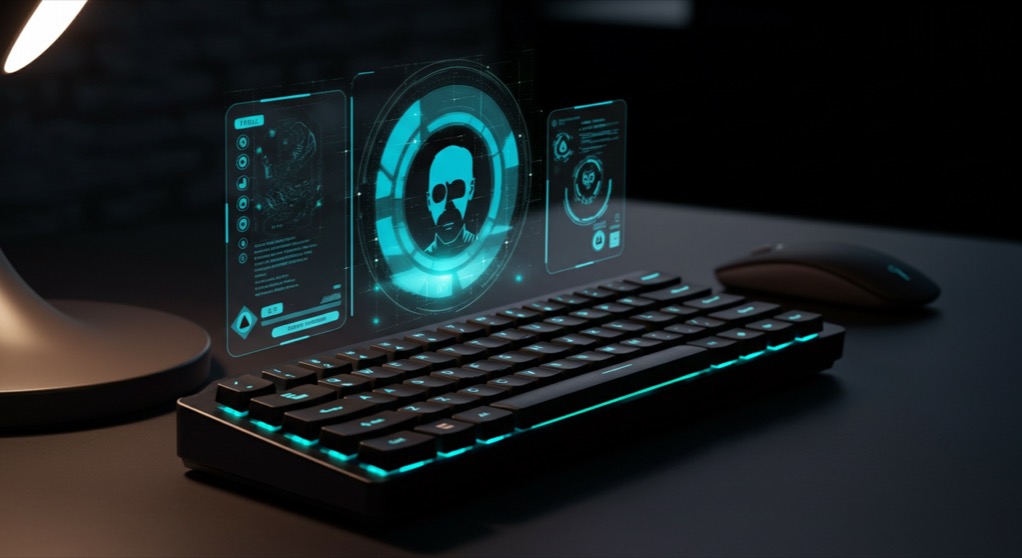
Aina's first shipping product is Dune, a three-key context aware macro keyboard. It is a compact keypad that runs pre-set shortcuts and can control microphone and camera functions during meetings. It can also execute scripts or shortcuts that change depending on which application the user has open. This contextual awareness is what distinguishes it from a standard macro pad.
The company actually developed three devices internally. Alongside Dune, it built Radiance, a tabletop remote for video calls featuring a dial for volume and dedicated buttons for microphone, camera, AI notetakers, voice modulation, and meeting controls. It also built Shift, a single-tap agentic button that connects to the user's phone and triggers an AI agent to execute a repeated task with a single press.
Early user testing revealed that Dune was the most popular of the three. Aina made the strategic decision to ship Dune first and fold the best features of Radiance and Shift into the keypad's capabilities. This iteration-based approach lets the company learn in the wild what kinds of tasks users actually want to automate before committing to a second product.
Shankar hinted that the next device is already in development and will begin testing with a small group of select users in the coming weeks. He described it as an action-oriented device, not another passive context capture gadget. He pointed out that phones and laptops already generate enormous amounts of context that most people never use effectively. The goal is to build hardware that uses that existing context to help users control and trigger workflows.
The Broader Shift to Agent Control Hardware
Aina is not alone in recognizing this opportunity. Just this week, OpenAI released a custom keypad for Codex built in collaboration with Work Louder, a design studio specializing in mechanical keyboards for developers. The keypad is specifically designed for controlling AI coding agents. Other players are emerging too, from keyboard manufacturers to DIY enthusiasts building their own agent control interfaces.
There are reports that OpenAI is developing a smart speaker with a built-in AI assistant. The Rabbit R1 has positioned itself as a device for invoking AI agents. Qualcomm says it is experimenting with more than 40 device form factors designed to interact with AI. What is clear is that the industry has not yet settled on a winning form factor. Rings, pins, glasses, keypads, speakers, and tabletop devices are all competing for the same use case: how humans will command AI agents in their daily workflow.
For founders, this represents a first mover window in a category that barely existed six months ago. The shift from passive recording devices to active control interfaces creates opportunities not just in hardware design but in middleware, software tooling, and workflow automation layers that sit between these devices and the AI agents they invoke.
What This Means for Founders
The AI hardware gold rush is pivoting. The first wave was about capturing data from users. The second wave, which Aina is betting on, is about letting users command AI agents with purpose-built physical interfaces. This shift has direct implications for founders across multiple verticals.
If you are building AI agents, you should be thinking about hardware interfaces that give users fast, tactile control over your software. If you are building in adjacent categories like meeting productivity, developer tools, or workflow automation, the proliferation of these devices creates integration opportunities. And if you are a hardware founder, the absence of a dominant form factor means there is still room to define a category.
Aina's $5.5 million raise, backed by notable angels and institutional investors, validates that this thesis has traction. The real test will be whether users adopt Dune as more than a novelty. If they do, the path is clear for a new category of AI peripherals that treat the user as a commander, not a data source.