
What if every BI tool, AI platform, and analytics engine in your stack defined revenue, customer count, and churn in exactly the same way? Apache Ossie, a new incubating project from the Apache Software Foundation, is betting that a vendor-neutral semantic metadata standard can make that vision a reality. The project addresses a hidden tax that costs enterprise data teams roughly 30 to 40 percent of their engineering time: reconciling metric definitions across incompatible platforms.
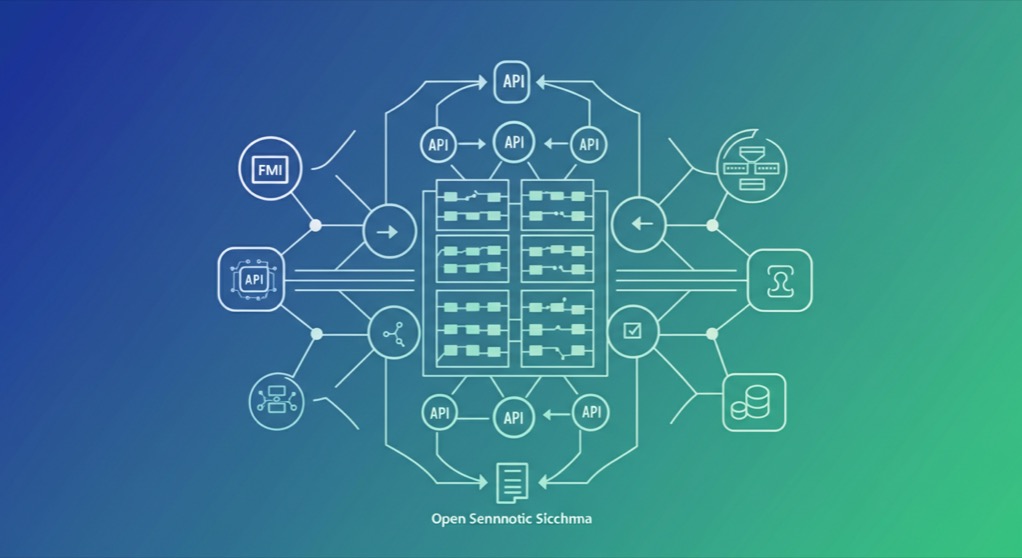
Formerly known as Open Semantic Interchange (OSI), Ossie provides a single JSON- and YAML-based specification that any tool can read and write. The specification covers datasets, relationships, fields, metrics, and custom extensions, all wrapped in a documented schema that enforces consistent structure. Reference converters already exist for Snowflake, dbt, Salesforce, Databricks, and Omni, meaning a metric defined once in Ossie can flow to any supported platform automatically.
Why Semantic Fragmentation Matters Right Now
The problem Ossie solves is invisible to most executives but painfully obvious to anyone building data pipelines. A typical enterprise runs four to seven analytics and BI tools simultaneously. Snowflake defines customer lifetime value one way. Tableau measures it differently. Databricks has its own semantic layer. AI agents trained on top of these systems produce unreliable outputs because the underlying business logic is inconsistent. The result is a continuous cycle of manual reconciliation, email chains asking which number is correct, and dashboards that disagree with each other.
This fragmentation is getting worse, not better, as AI agents become more embedded in enterprise workflows. When an AI agent pulls data from Snowflake for one query and Databricks for another, it has no way of knowing that the same metric name refers to different calculations. Ossie solves this by providing a single, authoritative semantic model that every tool references, eliminating the ambiguity at the source.
How Apache Ossie Works
The core specification defines a semantic model as a container with four main components. Datasets represent logical entities like orders or customers, each with a source reference, primary keys, and field definitions. Relationships connect datasets through foreign key constraints, supporting both simple and composite keys. Metrics are quantifiable measures defined as aggregate expressions on fields, with support for different SQL dialects including ANSI SQL, Snowflake SQL, Databricks SQL, BigQuery, and even MDX for multi-dimensional expressions.
Each dataset and metric can carry an ai_context field, a feature specifically designed for AI-native workflows. This field allows teams to attach synonyms, natural language descriptions, and custom instructions that help AI tools understand how to use the data correctly. A dataset labeled "orders," for example, might include synonyms like "purchases" and "sales" along with instructions about which fields represent revenue versus quantity.
The converter architecture follows a hub-and-spoke model. Instead of building point-to-point converters between every pair of vendors, Ossie acts as the central hub. Each vendor only needs two converters: one to import from Ossie and one to export to Ossie. With five vendor converters already in the repository and more under development, the network effect is already building.
Comparison to Existing Semantic Layer Solutions
This is not the first attempt to solve semantic fragmentation. dbt has its semantic models specification, which is powerful but tightly coupled to the dbt toolchain. Cube.js offers a semantic layer API with excellent developer experience but remains a proprietary format. GoodData has MAQL, its own metric definition language. Tableau and Power BI each have their own semantic model formats. What none of these provide is a truly vendor-neutral standard backed by an independent foundation.
Apache Ossie's key differentiator is the Apache Software Foundation governance model. Unlike proprietary attempts at standardization, Ossie's specification evolves through community working groups with documented roadmaps and public discussions. The roadmap already shows active working groups on metric semantics, catalog integration, and cloud-native operations. The project is not a static specification; it is a living standard designed to adapt as the ecosystem evolves.
Who This Is For
Apache Ossie is for any team that manages data across multiple platforms and wants to stop manually reconciling metric definitions. It is particularly valuable for data platform teams at mid-size to large enterprises running Snowflake alongside Tableau or Power BI, AI startups building agents that need reliable access to consistent business metrics, and IT services firms that manage data pipelines across dozens of client environments. The project is in early incubation with a 0.2.0.dev0 draft specification, so now is an ideal time to get involved and shape the standard before it stabilizes. The repository is available at github.com/apache/ossie, and the community welcomes contributions via GitHub Discussions, issues, and the project Slack channel.