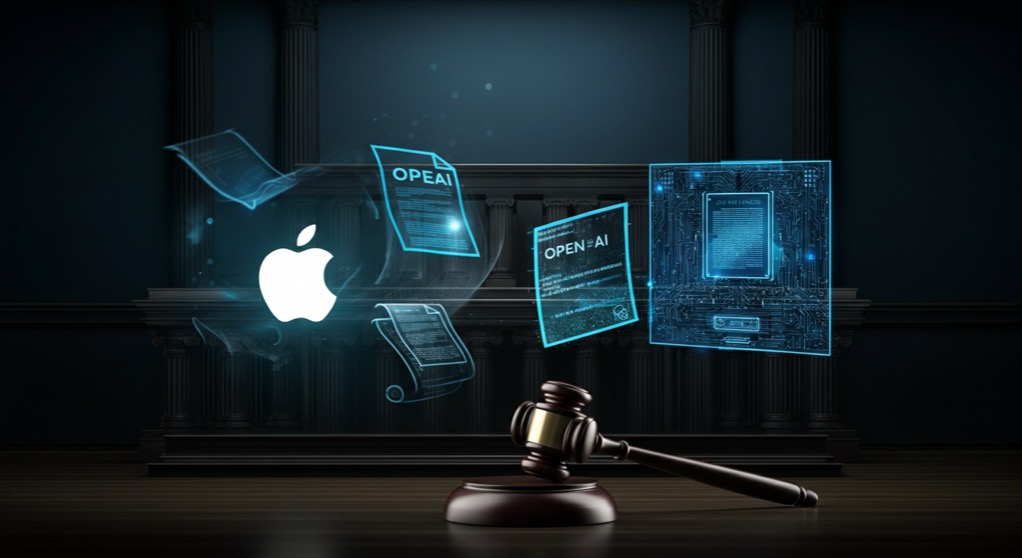
Apple has filed a trade secrets lawsuit against OpenAI that reads less like a routine corporate dispute and more like the opening chapter of a Silicon Valley thriller. The complaint, filed in California state court on July 13, names OpenAI, two former Apple employees, and Jony Ive's io Products firm as defendants, alleging a coordinated scheme to steal confidential hardware and design documents that Apple spent billions developing. If the allegations hold up in court, OpenAI's path to an initial public offering faces a legal roadblock that could delay or even derail what was expected to be one of the largest tech IPOs in history.
The Allegations: From Jokes to Trade Secret Theft
The lawsuit centers on two former Apple employees who reportedly left the company with confidential hardware blueprints and design documents, which they then allegedly shared with OpenAI and io Products. Jony Ive, the legendary former Apple design chief who left the company in 2019, has been drawn into the case through his firm io Products, which the complaint alleges was instrumental in helping OpenAI design its hardware lineup using Apple's proprietary technology.
The complaint contains several eye-catching allegations. In one instance, the former employees reportedly joked in internal messages about unauthorized access to Apple's internal design systems, treating the security breach as casual banter rather than the serious legal violation it represented. Another allegation claims that OpenAI job candidates were asked to bring Apple hardware prototypes to interviews, effectively turning the hiring process into an intelligence gathering operation. These details, if verified, paint a picture of a company that treated Apple's intellectual property as fair game in its race to build AI hardware.
OpenAI has denied the allegations, calling the lawsuit baseless and vowing to fight it in court. The company argues that its hardware designs were independently developed and that the former Apple employees brought no confidential information to their roles. But Apple's legal filing is unusually detailed, suggesting the company has substantial evidence including internal communications, design document metadata, and witness testimony from current and former employees.
The IPO Implications: A $300 Billion Question
OpenAI has been preparing for what analysts estimate could be a $200 to $300 billion IPO, a figure that would make it one of the largest public market debuts in technology history. The company has been positioning itself as a diversified AI powerhouse with three revenue streams: its ChatGPT subscription business, its API platform serving enterprise customers, and its growing hardware division that competes directly with Apple and other consumer electronics companies.
The trade secrets lawsuit threatens to disrupt all three pillars. If Apple prevails, OpenAI could face an injunction preventing it from selling hardware products built using the allegedly stolen technology. That would effectively shut down OpenAI's hardware ambitions overnight. Even a prolonged legal battle creates uncertainty that IPO underwriters typically dislike. Investment banks advising on the IPO are reportedly concerned about the lawsuit's timing, coming just months before OpenAI hoped to file its S-1 registration statement.
The legal standard for trade secret misappropriation requires Apple to show that the information was secret, that it took reasonable steps to protect it, and that OpenAI acquired it through improper means. California's Uniform Trade Secrets Act allows for both injunctive relief and monetary damages, including punitive damages for willful and malicious misappropriation. Apple is seeking both.
What This Means for Founders Building AI Hardware
For founders and operators building in the AI hardware space, this lawsuit serves as a wake-up call about the increasingly blurred lines between talent mobility and intellectual property. The AI industry has been running on a model where top engineers move freely between companies, often bringing deep knowledge of their previous employer's systems. This case tests whether that practice crosses the line into illegal trade secret theft.
The involvement of Jony Ive's io Products adds another layer of complexity. Ive is one of the most celebrated industrial designers in the world, and his firm's alleged participation in the scheme suggests that the boundaries between legitimate design consulting and trade secret appropriation are being tested at the highest levels. If io Products is found to have knowingly used Apple's confidential designs in its work for OpenAI, the reputational damage to Ive's firm could be as significant as the legal penalties.
Startups building AI hardware should take three immediate actions. First, audit their hiring practices to ensure no confidential information from previous employers enters their design process. Second, implement clear separation between what engineers know personally and what they bring from prior roles. Third, document all design decisions with independent research trails that can withstand legal scrutiny. A trade secrets lawsuit can destroy a young hardware company, and the best defense is a clean paper trail.
The Bigger Picture: AI's Legal Reckoning Has Arrived
This lawsuit is not happening in isolation. It follows a wave of copyright and intellectual property cases against AI companies, including lawsuits from The New York Times, Getty Images, and individual authors alleging that AI models were trained on copyrighted material without permission. What makes the Apple case different is that it targets the physical hardware layer of AI rather than the model training layer. That distinction matters because hardware involves tangible trade secrets that are easier to prove in court than the murky boundaries of fair use in AI training data.
If Apple wins, the precedent could fundamentally change how AI companies approach hardware development. The era of treating other companies' proprietary designs as freely available reference material would end, forcing AI hardware makers to invest in truly original research and development. For the industry as a whole, that would be a painful but necessary correction.
For OpenAI, the stakes could not be higher. The company is already facing regulatory scrutiny in multiple jurisdictions, questions about its governance structure, and competition from open-source alternatives. A trade secrets lawsuit loss would be the most damaging blow yet, potentially reshaping the entire competitive landscape of the AI industry. The next 90 days will determine whether this case fizzles out in pretrial motions or becomes the defining legal battle of the AI era.