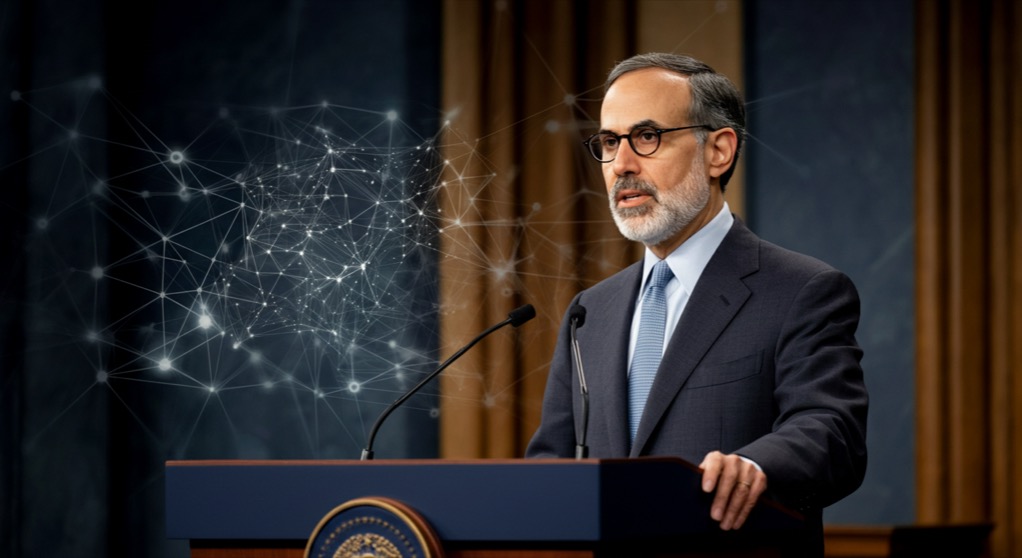
When a former Chair of the Federal Reserve accepts a seat on an AI company's governance board, it is not a routine appointment. It is a signal that frontier AI is being treated the way we treat too-big-to-fail banks, systemic infrastructure, and institutions whose failure would cascade through the economy. On July 9, 2026, Dr. Ben Bernanke, the Nobel Prize-winning economist who led the Federal Reserve through the 2008 financial crisis, was appointed to Anthropic's Long-Term Benefit Trust (LTBT). He joins an independent body with the authority to appoint members to Anthropic's board and to advise on critical decisions involving the risks and societal impacts of advanced AI.
The Appointment and Why It Matters
The LTBT exists because Anthropic is structured as a Public Benefit Corporation: a legal entity designed to balance commercial success with social and public good. The Trust is the governance mechanism that enforces that balance. Its members hold no equity in Anthropic, share in no profits, and are compensated only for their time. They are chosen by existing trustees, not by company management. In practice, this means the LTBT has the authority to shape Anthropic's major decisions on safety protocols, deployment timelines, and even board composition without being beholden to shareholder returns.
Bernanke's appointment brings a specific kind of expertise to this structure. He spent eight years steering the U.S. economy through the worst financial crisis in nearly a century. Before that, he spent decades as an academic economist studying the Great Depression and the role banks play in financial crises. That body of work earned him the Nobel Prize in Economic Sciences in 2022. For Anthropic, which has publicly identified understanding AI's economic impact as one of its core research priorities, Bernanke brings the exact perspective needed to evaluate how frontier AI will reshape labor markets, productivity, and the structure of the global economy.
Why a Central Banker for AI Governance
The logic of Bernanke's appointment becomes clear when you consider what central bankers actually do. They manage systemic risk. They evaluate whether institutions are solvent, whether markets are stable, and whether policy interventions will prevent cascading failures. These are the same questions that will define AI governance at the frontier. When a company like Anthropic deploys a model that millions of developers build on, the failure modes are not isolated bugs: they are systemic events that can affect infrastructure, economic activity, and public trust.
This is not a comparison Anthropic is making implicitly. Daniela Amodei, Anthropic's Co-Founder and President, stated in the announcement: 'AI may have the most significant economic effects of any technology in modern history, and Anthropic has a dual responsibility to understand those effects and to act on them.' The company is explicitly treating AI as an economic phenomenon that requires the same rigor and institutional safeguards we apply to monetary policy and financial regulation. For founders building on frontier AI platforms, this has concrete implications. The era of moving fast and breaking things is giving way to an era where institutional credibility, external oversight, and governance compliance are becoming table stakes for operating at the frontier.
The LTBT Model and What It Means for the Industry
The LTBT is not the only governance experiment in AI, but it is one of the most structurally robust. Other companies have created ethics boards, advisory councils, or external review committees. What distinguishes the LTBT is its independence from commercial incentives and its formal authority over board composition. The trustees cannot be fired by management. They cannot be overruled on governance matters. And as the Trust adds more members with the stature of Bernanke, its influence over Anthropic's strategic direction grows.
This matters for the broader AI industry for two reasons. First, it sets a precedent that other frontier AI companies will be measured against. When a company reaches the scale and systemically relevant position that Anthropic occupies, investors, regulators, and the public will ask: where is your independent governance body? Who sits on it? What authority does it actually have? Second, it creates a talent pipeline problem. There are only a handful of people with the combination of institutional credibility, domain expertise, and willingness to serve on AI governance bodies that the LTBT model requires. As demand for these trustees grows across the industry, the competition for talent in AI governance will intensify.
What This Means for Founders
For founders building AI companies, Bernanke's appointment is a canary in the governance mine. The immediate takeaway is that institutional credibility matters more than it did six months ago. If Anthropic is bringing in a former Fed Chair to oversee its governance, then every AI company that wants to be taken seriously at the frontier level will need to think seriously about its governance structure. This does not mean every startup needs a Nobel Prize winner on its board. But it does mean that transparency around safety protocols, third-party audits, and independent oversight mechanisms are becoming hygiene factors for raising institutional capital and securing enterprise customers.
The second implication is about timing. Governance expectations are currently ahead of regulation, not behind it. The LTBT is a voluntary structure that Anthropic created before regulators required it. Founders who wait for regulation to force governance changes will find themselves reacting, not leading. The smart play is to build governance frameworks now, document them publicly, and treat them as a competitive advantage rather than a compliance burden. Bernanke's appointment signals that the bar for what counts as credible AI governance just moved up, and it will keep moving up as more institutional figures lend their names to this work.