
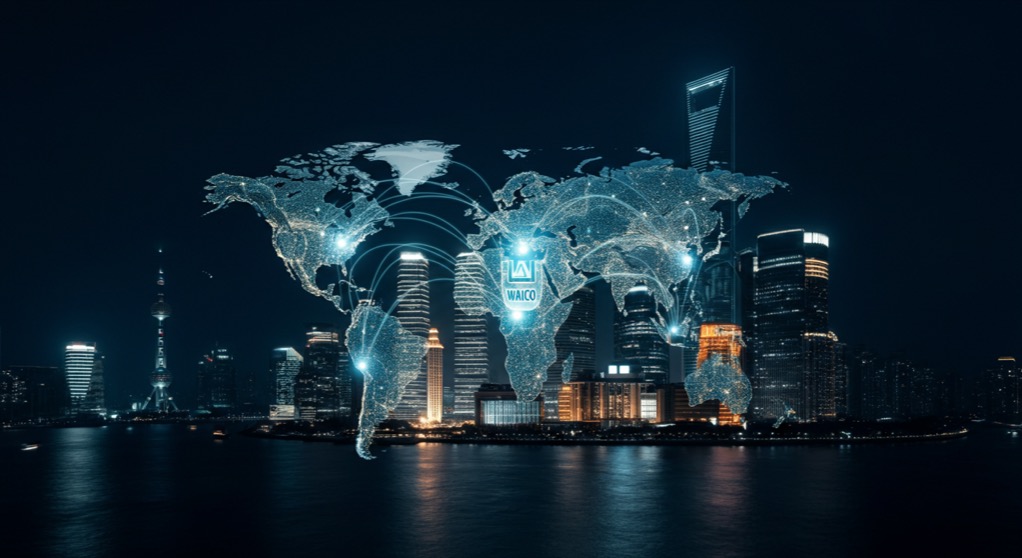
Twenty nine nations gathered in Shanghai on July 16, 2026, and signed the founding charter of the World AI Cooperation Organization, a new intergovernmental body headquartered in Shanghai that aims to establish international AI governance standards. The United States was not invited to join. The move represents the most significant geopolitical realignment in AI governance since the formation of the US-led AI Safety Institute network, and it creates a fundamentally different operating environment for any founder building AI products with global ambitions.
The new organization, abbreviated as WAICO, includes China, Russia, India, Brazil, Saudi Arabia, Kazakhstan, Pakistan, Indonesia, Laos, and most of the Global South among its 29 founding nations. Chinese Foreign Minister Wang Yi joined representatives from member states at a signing ceremony during the World AI Conference in Shanghai, where President Xi Jinping called for international AI development cooperation and compared the AI revolution to the historical impact of the steam engine. UN Secretary General Antonio Guterres attended the ceremony, underscoring the high stakes of this new governance framework.
What WAICO Actually Does
WAICO is structured as an independent international organization guided by United Nations Charter principles, with a stated mission to promote beneficial, safe, and fair AI development. In practice, the organization aims to establish alternative international AI governance standards, foster open source AI development outside the US orbit, and coordinate research efforts among member states. The language mirrors the stated goals of the US-led AI Safety Institute network but with a fundamentally different geopolitical orientation.
The launch comes alongside the debut of Huawei's Atlas 950 SuperPoD, a massive AI computing cluster designed to function independently of high end US semiconductors from companies like Nvidia. This hardware announcement, timed to coincide with WAICO's formation, signals that the governance divide is matched by a hardware divide. Countries that join WAICO are signaling not just a policy preference but a willingness to build AI infrastructure that does not depend on US supply chains.
For founders, the important detail is not the diplomatic posturing. It is the divergence in technical standards that will follow. WAICO members are likely to develop their own frameworks for training data provenance, model auditing, safety testing, and deployment permissions. These frameworks will differ from the standards being developed by the US AI Safety Institute and its allied network. A model that passes safety testing under one regime may not automatically qualify under the other.
Why India's Participation Changes Everything
India's role as a founding member of WAICO is the most consequential detail for the global AI startup ecosystem. India is also a participant in US led AI governance initiatives. This dual membership puts Indian founders in a unique position, but it also creates a compliance burden that startups in other countries do not face.
Indian AI startups now have potential access to a massive alternative market for AI products that bypass Silicon Valley gatekeepers. The Chinese AI ecosystem has produced models like Moonshot AI's Kimi K3 that undercut US model pricing by 5 to 10 times, and WAICO's open source mandate could make these models more accessible to member states. For a founder building an AI product in Bangalore, the opportunity to serve customers across the Global South without relying on US cloud providers or US model APIs is real and immediate.
But the regulatory cost is equally real. Indian founders now need to navigate two sets of AI compliance requirements. Products deployed in WAICO markets will need to meet one set of standards for training data provenance, model safety testing, and content moderation. Products deployed in US or European markets will need to meet a different set. The compliance overhead is not trivial, and it will favor startups that design for multi regime compliance from day one rather than retrofitting later.
The Open Source Divergence That Changes the Game
The most consequential impact of WAICO for founders may be in open source AI. The US led governance framework has been increasingly focused on safety testing, watermarking, and model registration requirements for open weight models. WAICO's approach, based on the Chinese government's stated position, is likely to emphasize open source availability as a public good while imposing its own standards for content control and data sovereignty.
This creates a scenario where the same open source model could face different restrictions in different markets. A model released under a WAICO aligned license might include requirements around training data provenance that satisfy Chinese regulators but conflict with US export controls. A model released under a US aligned framework might include safety testing requirements that WAICO members do not recognize. For founders building on open source models, the choice of which licensing framework to adopt becomes a strategic decision with real market access implications.
The divergence is already visible in hardware. Huawei's Atlas 950 SuperPoD is designed to run AI workloads without Nvidia GPUs, using Huawei's own Ascend processors. This means that AI startups in WAICO member states may have access to compute infrastructure that is isolated from US supply chain controls. For founders building AI products that require significant compute, this creates an alternative infrastructure path that did not exist before WAICO.
What Founders Need to Do Now
The formation of WAICO is not a distant geopolitical event. It has immediate practical implications for any founder building AI products with international customers or relying on open source models. Here is what the data suggests you should be doing right now.
First, audit your model supply chain. If your product depends on a specific model provider or training data source, understand which AI governance regime that supplier operates under. A model provider based in the US may face restrictions on exporting to WAICO member states, and vice versa. Second, design for multi regime compliance from the start. The compliance cost of adapting a product to a second regulatory framework after launch is significantly higher than building for both from day one. Third, watch the hardware supply chain. If your startup depends on Nvidia GPUs for inference or training, the emergence of alternative compute infrastructure in WAICO markets could create both a risk of supply disruption and an opportunity for cost arbitrage.
The counterintuitive takeaway for founders is that the creation of WAICO may actually be a net positive for startups that move early. Two competing governance regimes create friction for incumbents that are deeply embedded in one system. For a nimble startup, the ability to serve customers in both regimes, or to arbitrage the differences between them, is a real competitive advantage. The founders who recognize this early and build accordingly will be the ones who benefit from the fragmentation of global AI governance.