
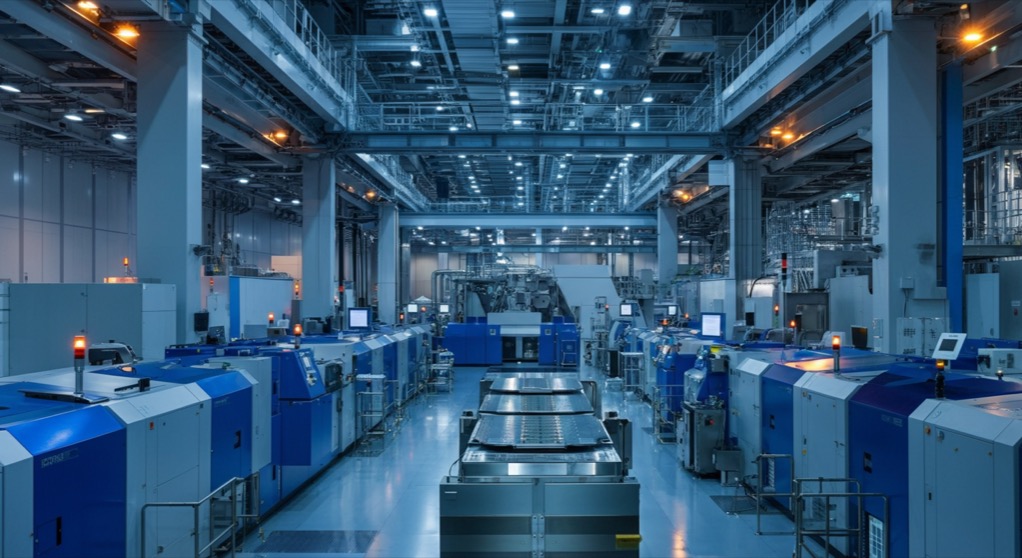
In a week where Chinese tech stocks have shed nearly $200 billion in combined market value, ChangXin Memory Technologies (CXMT) is pressing ahead with an $8.6 billion initial public offering on Shanghai's STAR Market that would mark the largest listing in China since Agricultural Bank of China raised $22 billion in 2010. The DRAM chipmaker, China's sole mass producer of memory chips, priced its IPO at 8.66 yuan per share and is scheduled to debut on July 27, 2026, with a valuation hovering around $85 billion. The offering has already been oversubscribed 212 times by institutional investors, yet questions linger about whether CXMT's ambitions can withstand the broader market turmoil gripping Chinese equities.
The Scale of the CXMT IPO and What It Funds
CXMT is aiming to raise approximately 57.9 billion yuan ($8.55 billion) before any over-allotment option. If the greenshoe is fully exercised, gross proceeds would climb to roughly 66.6 billion yuan, or nearly $9.9 billion. That would make it not just China's largest semiconductor IPO but one of the top ten tech IPOs globally in the past decade, surpassing Semiconductor Manufacturing International Corporation's (SMIC) 2020 record of 53 billion yuan. The proceeds are earmarked for expanding DRAM production capacity at CXMT's Hefei fabrication facility, funding research and development for next-generation memory technologies, and retiring existing debt. CXMT currently trails far behind global leaders Samsung Electronics and SK Hynix, which together control roughly 85 percent of the global DRAM market. The IPO cash gives CXMT a war chest to narrow that gap at a time when memory demand is surging thanks to AI model training workloads and data center expansion.
DRAM is the unsung hero of the AI boom. Every large language model training run, every inference server cluster, and every GPU array depends on massive amounts of high-bandwidth memory. Samsung and SK Hynix have been the primary beneficiaries of this demand, with both companies reporting record quarterly profits throughout 2025 and 2026. CXMT's challenge is that it is still several generations behind in process technology: while Samsung and SK Hynix are shipping 12-nanometer and 1b-nanometer DRAM, CXMT is believed to be producing at 17-nanometer or above. The IPO funds are intended to accelerate its technology roadmap and bring it within striking distance of industry leaders within two to three years.
US Export Controls and the Geopolitical Dimension
The CXMT IPO cannot be understood without the backdrop of US-China semiconductor tensions. The Biden administration's export controls, largely maintained and in some areas tightened under the Trump administration, have restricted Chinese access to advanced chipmaking equipment from ASML, Applied Materials, and Lam Research. These controls directly affect CXMT's ability to procure the extreme ultraviolet lithography (EUV) machines required for leading-edge DRAM manufacturing. CXMT's response has been to double down on domestic equipment suppliers and develop alternative manufacturing techniques that work within the constraints of available tools. The IPO proceeds, in part, fund these domestic supply chain investments.
China's government has made semiconductor self-sufficiency a national priority, channeling hundreds of billions of yuan through the Big Fund (National Integrated Circuit Industry Investment Fund) and provincial-level incentives. CXMT, headquartered in Anhui province, has been a direct beneficiary of this policy push. The IPO represents a transition from state-backed funding to public market financing, a shift that gives CXMT more operational independence while exposing it to the scrutiny of public market investors. State-owned entities and strategic investors are expected to anchor a significant portion of the IPO book, ensuring the offering's success even if foreign capital is cautious given geopolitical uncertainties.
Mixed Signals: Oversubscription Meets Market Skepticism
The 212-times oversubscription figure suggests enormous demand, but the picture is more nuanced. Reports from Bloomberg and Reuters indicate that while retail investors chased the IPO aggressively, institutional demand was more measured, with some large fund managers expressing concern about CXMT's valuation relative to its technology position. At an $85 billion valuation, CXMT trades at roughly 8 times its estimated 2026 revenue of $10 to $11 billion, compared with Samsung's semiconductor division trading at around 3 times revenue and SK Hynix at about 4.5 times. That premium reflects the China narrative premium investors assign to domestic champions, but it also leaves less room for error.
Adding to the caution, Chinese tech stocks broadly have been under pressure. The CSI 300 Index has fallen 12 percent from its 2026 peak, and the STAR Market index has declined 18 percent. CXMT's listing date of July 27 falls within this volatile window, raising the possibility that the stock could trade below its IPO price in the first few sessions. Yet the broader strategic case remains intact: as AI workloads proliferate across China's technology ecosystem, demand for domestically produced memory chips will only grow, especially if geopolitical tensions further restrict access to Samsung and SK Hynix products.
What CXMT's IPO Means for Founders and the AI Supply Chain
For founders building AI infrastructure and applications, CXMT's mega-IPO carries several implications. First, it signals that the memory chip shortage that constrained AI model training in 2024 and 2025 is being addressed through massive capital investment. More DRAM capacity means lower memory costs for GPU clusters, which directly reduces the cost of training and inference for AI startups. Second, CXMT's emergence as a credible third player in DRAM challenges the Samsung-SK Hynix duopoly, potentially driving down memory prices over the medium term. Third, the IPO validates the thesis that AI infrastructure investment is moving beyond just GPUs into the supporting memory and storage layers.
However, founders should also note the risks. CXMT's technology gap means it will take years before its memory products can compete at the highest performance tiers needed for frontier AI training. And the geopolitical overlay means that any CXMT success story will trigger further US scrutiny and potentially tighter export controls, creating knock-on effects across the entire semiconductor supply chain. For now, CXMT's IPO is a landmark moment for China's semiconductor ambitions and a signal that the AI hardware buildout is still in its early innings.