
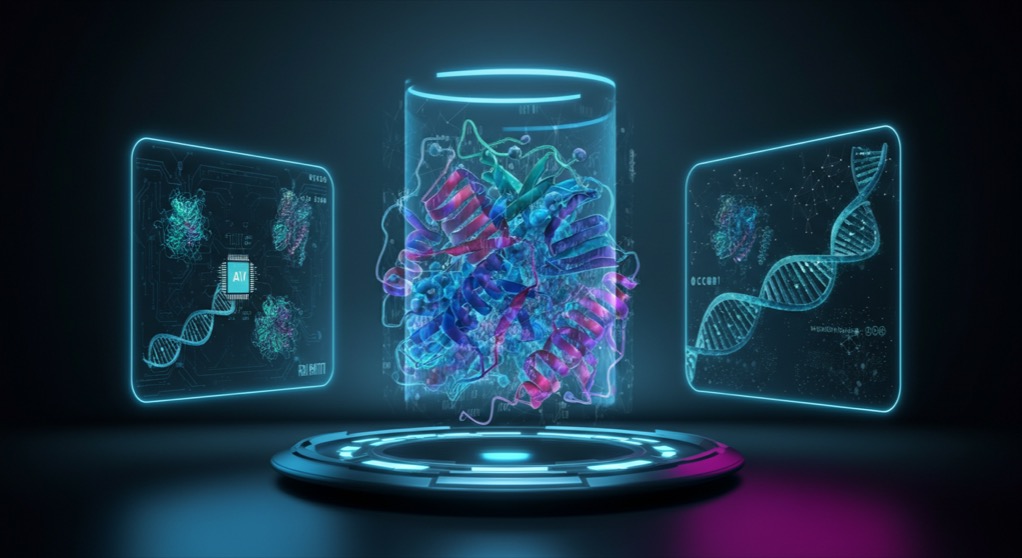
In July 2026, Google DeepMind and Isomorphic Labs published their joint bioresilience framework, a strategic blueprint that repositions AI in biology from a passive discovery tool to an active engineering discipline. The announcement, published on DeepMind's blog, represents the first comprehensive articulation of how AI can move beyond predicting molecular structures to designing biological systems with specified properties. For founders building at the intersection of AI and life sciences, the framework signals a fundamental shift in what biotech platforms are expected to deliver.
What Bioresilience Actually Means
Bioresilience is a term DeepMind and Isomorphic Labs are using to describe the ability to design biological systems that are robust across multiple dimensions, resistant to mutation, stable under environmental stress, and reproducible in manufacturing environments. This goes significantly beyond what the industry has accomplished so far. AlphaFold solved protein structure prediction, mapping nearly all known proteins. AlphaMissense predicted which genetic variants would cause disease. But neither of those offered the ability to generate new biological systems with predetermined characteristics. The bioresilience framework stitches together three capabilities: AlphaFold 3 for structure prediction, AlphaMissense for variant effect analysis, and new generative design models that produce protein sequences with specified stability and function profiles. Together, they form a closed loop from prediction to generation to validation.
The Stack Behind the Framework
The bioresilience stack operates across three operational domains. On the prevention side, DeepMind is adapting its SynthID watermarking technology, originally built for AI-generated images, to biology, enabling DNA synthesis providers to screen for potentially risky AI-generated sequences. On the detection side, the AlphaEvolve agent optimizes metagenomic sequencing algorithms to spot novel pathogens faster and more cheaply. AlphaGenome and protein function annotation tools are being deployed to characterize emerging threats from raw sequence data. On the response side, Isomorphic Labs has established a dedicated unit to deploy its drug design engine during novel outbreaks, working with governments and nonprofits to accelerate countermeasure development. The company already has three preclinical programs underway with Eli Lilly and Novartis.
What makes this architecture notable is not any single model but the integration layer. DeepMind and Isomorphic are building an operating system for biology, one where prediction models feed into design models, which feed into manufacturing simulations, with feedback loops at every stage. This is the equivalent of moving from a microscope that shows you what something is to a CAD program that lets you build something new.
The Market Implications for Biotech Founders
The bioresilience framework redraws the competitive landscape for AI-first biotech companies in three important ways. First, the bar for AI partnerships with pharma just rose. Pharmaceutical companies will no longer accept hit identification alone, they will demand end-to-end design capabilities that include manufacturability profiles, stability across environmental conditions, and predicted failure modes. Second, the total addressable market expands from drug candidates to manufactured biologics with known performance characteristics. This shifts the value proposition from discovery acceleration to risk reduction: a molecule that has been computationally stress-tested across thousands of environmental and mutational scenarios before a single wet-lab experiment is fundamentally more valuable than one that has not. Third, the competitive moat moves from prediction accuracy to design reliability. Any lab with sufficient compute can run AlphaFold. But building generative models that produce sequences with specified stability and function profiles, and validating those predictions, requires infrastructure, proprietary data, and integration skills that take years to assemble.
What This Means for Builders
For founders in AI-driven biology, the bioresilience framework points to several strategic moves. The integration of prediction, prediction of effects, and generation into a single pipeline is becoming table stakes. Startups that can offer design-to-manufacturing workflows, where an AI model generates a protein sequence and simultaneously provides its stability profile, mutation tolerance, and manufacturing yield estimate, will have a structural advantage over those that offer isolated services. The emergence of SynthID for DNA synthesis also signals a coming regulatory layer: as AI-generated biological sequences become harder to distinguish from natural ones, provenance and watermarking technologies will become compliance requirements, not optional features. For biotech founders, the window to build these capabilities is narrow. The bioresilience framework is being released into an open ecosystem, DeepMind and Isomorphic are actively seeking government and nonprofit partners, which means the design methodologies, evaluation protocols, and benchmark datasets will likely become public standards within 12 to 18 months. The opportunity is not in replicating what DeepMind built, but in applying these capabilities to specific therapeutic areas, manufacturing processes, or diagnostic workflows where speed of execution and domain expertise still matter more than raw model performance.