
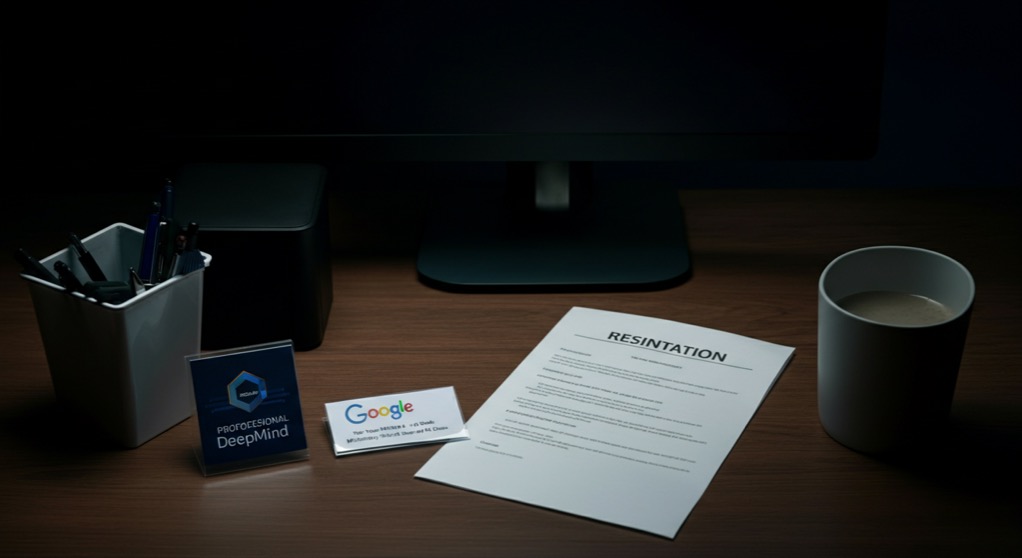
When does a job become a moral compromise you can no longer live with? For Alex Turner, a research scientist who spent more than two years working on AI safety at Google DeepMind, the answer came in June 2026, when he walked away from one of the most coveted roles in artificial intelligence without another offer in hand. Turner resigned after Google signed a classified agreement with the U.S. Department of Defense, joining Microsoft, Amazon, and OpenAI in providing AI for what the Pentagon described as lawful operational use. His 2,000-word resignation letter, published on his personal blog and shared internally at Google, lays out a stark calculation: staying would have required him to ignore a shift in company values that he could not square with his conscience.
The Deal That Broke the Camel's Back
In early May 2026, the Pentagon confirmed it had signed agreements with a group of major technology companies, including Google, to use their AI systems for classified military operations. For Turner, this was not a sudden shock but the culmination of a long-watched trajectory. He told Business Insider that he began considering leaving in February, when it became clear that Google would sign the deal. The Pentagon announcement simply removed any remaining ambiguity. When Google signed the deal, my conscience simply said 'nope,' Turner told Business Insider. The decision was especially painful because Turner had spent months trying to change Google's course from the inside. Earlier in 2026, he drafted a framework for military AI that included specific provisions to ensure human control over AI targeting systems. He brought the proposal to Google's chief scientist Jeff Dean over lunch, then escalated it to DeepMind CEO Demis Hassabis. Hassabis directed him to two senior policy staff for evaluation. After a few rounds of discussion, the responses stopped. Shortly after, the Pentagon deal was confirmed.
The classified nature of the agreement was a central point of contention. Unlike Google's previous defense contracts, which had some degree of public visibility, the classified deal meant that even internal oversight was limited. Roughly 600 of Google's 195,000 employees signed a petition in April asking the company not to enter any agreement involving classified work. A classified agreement limits how much oversight Google employees, and by extension the public, have over how the company's AI is used in military contexts.
Google's AI Principles: A Quiet Reversal
The Pentagon deal would not have been possible without a foundational change Google made in early 2025. That was when the company quietly updated its AI principles to remove pledges that it would not pursue the use of AI for weapons or mass surveillance. Demis Hassabis co-authored a blog post announcing the change, framing it as a necessary evolution for a technology that had grown beyond the original framing. Employees at the time pushed back, but the leadership held firm. In an internal message viewed by Business Insider, Turner pointed to a disconnect between Hassabis's public statements that his personal principles had not changed and the company's decision to remove the very language that codified those principles. As Turner wrote: If I can't trust this easily verifiable claim, how am I supposed to rest easy on the careful oversight he says protects us? The timing matters. Google's reversal in early 2025 opened the door for the military contracts that followed in 2026. By the time employees learned the scope of what Google had signed, the company had already removed the governance structures that would have given them a voice in the decision.
A Broader Exodus of Conscience
Turner is not alone. His departure is part of a wave of employee activism at Google that has been building for months. In April, Andreas Kirsch, another DeepMind research scientist, told Business Insider he was incredibly ashamed of Google's Pentagon agreement. A separate employee published a resignation letter internally in May citing Google's closer relationship with the military. In the U.K., Google DeepMind workers have voted to unionize specifically over military AI contracts. Google's security director also resigned, saying management had lost its moral compass. The pattern extends beyond Google. OpenAI has seen its own high-profile departures over military deals and safety concerns. Anthropic, meanwhile, has become entangled in a legal fight with the Pentagon over the military use of AI, drawing support from employees at both Google and OpenAI. What makes Turner's departure different is the purity of his protest. He told Business Insider he has no other job lined up and is not flirting with competitor labs for a signing bonus. He is doing independent AI safety and security work while he figures out his next move. I'm unemployed right now, he said.
What This Means for Founders
For founders building in AI, the Turner resignation is not just an ethics story. It is a signal about where the talent market and regulatory environment are headed.
Talented people will vote with their feet. The best AI safety researchers are increasingly unwilling to work at companies that pursue military contracts without transparent governance. If your startup works with defense or government agencies, you need an ethics framework that your team actually believes in, not a blog post you wrote last year and forgot about. Turner's departure proves that a well-reasoned resignation letter carries more weight than any marketing campaign.
Congressional scrutiny is accelerating. Senator Elizabeth Warren is simultaneously demanding that the Pentagon and AI companies release full military contracts. The combination of high-profile resignations and legislative pressure could force a new level of transparency. For startups with government contracts, this means your agreements may soon become public whether you want them to or not.
Your governance structure is now a recruiting tool. The AI talent market in 2026 is bifurcating. One group of engineers is indifferent to military applications. Another group actively avoids them. If you cannot articulate clear red lines for how your AI is used, you will lose access to the latter group. Turner's blog post, his lunch with Jeff Dean, and his ignored proposal to Hassabis form a case study in how a company's failure to engage with internal dissent can drive away the very people it needs to build safe AI.
Turner's question to Google applies to every AI startup: if your team cannot trust your publicly stated principles, why should they stay to find out what happens next?