
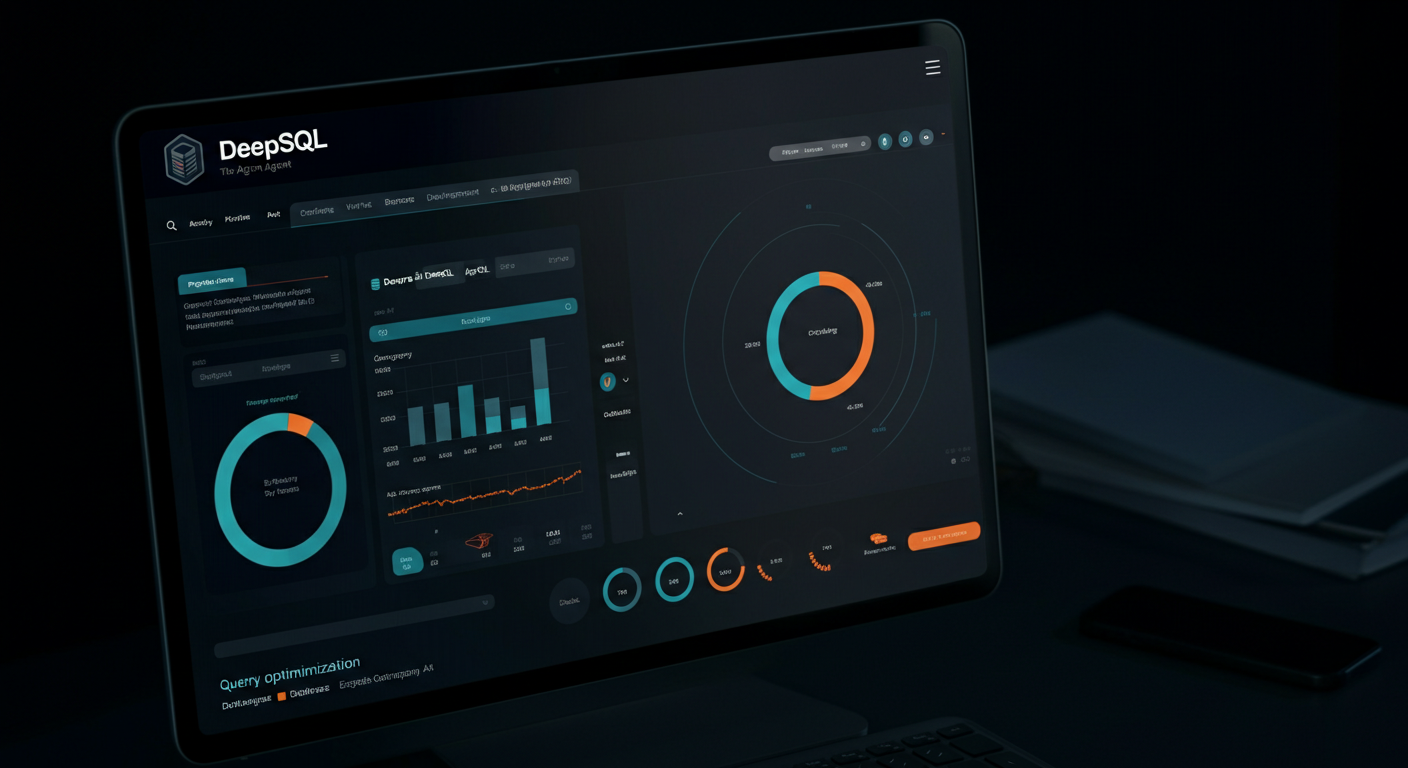
DeepSQL launched on Hacker News today as a self-hostable AI agent for Postgres and MySQL that promises to replace your DBA team, your BI tools, and your query optimization workflow in one command-line install. The team claims a 15-minute setup from zero to a working agent that monitors, optimizes, and chats with your database. But how does it compare with the tools Postgres teams actually use today?
Why It Matters
Database management has not changed much in 20 years. Teams still rely on manual query tuning, expensive DBAs, and fragmented observability tools. DeepSQL enters a market dominated by pganalyze (the gold standard for Postgres performance), pg_stat_monitor (open source), and hosted solutions like RDS Performance Insights. The difference: DeepSQL adds an AI agent layer on top of all of it.
The question is whether an AI agent can actually replace the stack of tools most teams already run. Here is how DeepSQL stacks up against three of the most common approaches.
Background
DeepSQL is a self-hosted agent that connects to Postgres or MySQL read replicas using read-only credentials. It indexes your schema, learns your workload patterns from pg_stat_statements or MySQL slow logs, and lets you ask questions in natural language through a web UI, CLI, Slack, or MCP protocol. The founder, venkat971, describes it as giving your existing engineers DBA-level superpowers rather than replacing a DBA entirely.
pganalyze has been the default choice for Postgres performance monitoring since 2014. It offers query fingerprinting, index recommendations, lock analysis, and a dashboard-driven workflow. Teams pay by the number of databases monitored. It does not include natural language querying or BI dashboard generation.
pg_stat_monitor is an open source extension from Percona that provides query performance metrics, histograms, and plan-level details. It is free but requires:
- Manual setup and configuration per database
- Manual analysis of slow query patterns
- A separate visualization layer like Grafana or a custom dashboard
RDS Performance Insights is AWS's free built-in tool for RDS databases. It gives you a database load chart and top SQL queries. It is easy to enable but provides zero recommendations beyond what the dashboard shows.
Key Insights
1. DeepSQL is the only tool that combines observability with action. pganalyze and pg_stat_monitor tell you what is slow. They do not tell you who or what caused it in the context of your business. DeepSQL indexes business rules alongside schema, so it can answer questions like "Which customers contribute most to write amplification?" without you writing a query.
2. The self-hosted model is both a feature and a risk. Hacker News commenters pointed out that asking teams to curl a binary with database-level access is a trust barrier. But for companies with compliance requirements (SOC 2, HIPAA, financial services), self-hosting is non-negotiable. pganalyze offers a self-hosted tier, but DeepSQL's one-line install may be faster for teams that already have the infra.
3. The breadth of features creates surface area risk. DeepSQL tries to replace query monitoring, schema analysis, BI dashboards, and the DBA itself. Each of those is a mature market with incumbents. pganalyze wins on depth for query performance alone. DeepSQL wins on breadth. But breadth is harder to execute on day one.
| Feature | DeepSQL | pganalyze | pg_stat_monitor | RDS Perf Insights |
|---|---|---|---|---|
| Natural language queries | Yes | No | No | No |
| Self-hosted | Yes | Paid tier | Yes | N/A (AWS only) |
| Business rule indexing | Yes | No | No | No |
| BI dashboard generation | Yes | No | No | No |
| Slow query fingerprinting | Yes | Yes | Yes | Basic |
| MCP protocol support | Yes | No | No | No |
| MySQL support | Yes | No | No | Yes (RDS) |
The table makes one thing clear: DeepSQL is doing something none of the others are doing. No existing tool lets you ask plain English questions about your database or generates BI dashboards from slow query context. But those are also the features that are hardest to trust on day one. If the AI hallucinates a query recommendation, you could make things worse.
What This Means for Founders
If you run Postgres in production and your team has no dedicated DBA, DeepSQL is worth a try. The 15-minute self-hosted install means zero onboarding friction. Give it read-only access to a replica, teach it a few business rules, and see if it catches something your existing monitoring misses.
Do not treat it as a drop-in replacement for pganalyze just yet. pganalyze has a decade of query performance tuning data. DeepSQL has a landing page and 48 HN points. Use DeepSQL as a conversational layer on top of your existing observability stack. If the AI proves reliable, consider shifting more trust to it over time.
The bigger takeaway is where the market is heading. Database tooling is about to get the AI agent treatment just like every other DevOps category. DeepSQL is the first real attempt at an AI-native DBA. Whether it succeeds or fails, the future of database management will look more like a conversation and less like a dashboard.
🤝 Disclosure
Some of the links in this article are referral links. If you sign up through these links, we may earn a small commission at no extra cost to you. This helps us keep The Break Daily free for everyone.