
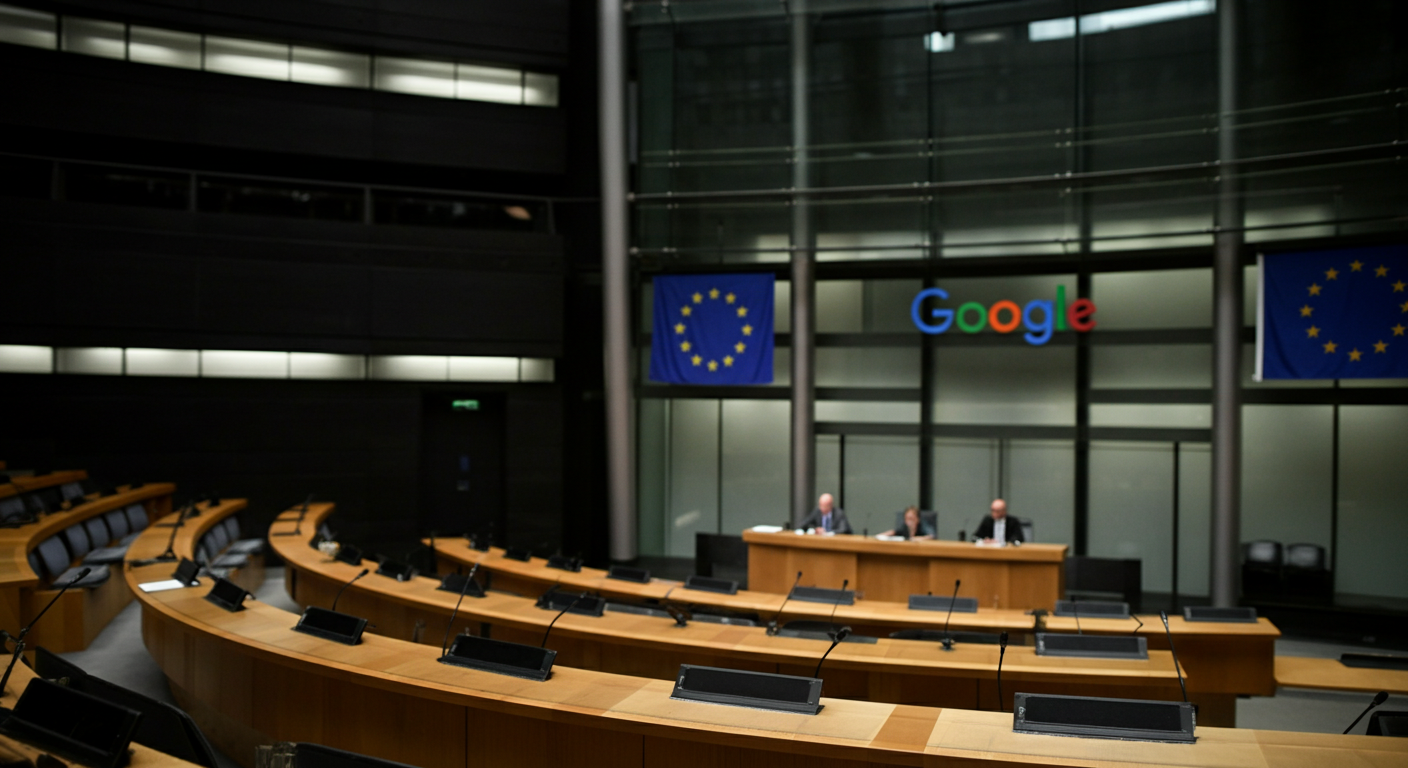
The European Commission just fined Google 890 million euros for violating the Digital Markets Act. That is 460 million for prioritizing its own services in search results and 430 million for blocking app developers from telling users about cheaper options outside Google Play. Combined, it is the largest DMA fine to date.
Why It Matters
This is not just a fine. It is a structural order. The EU is not asking Google to pay and move on. It ordered Google to treat third party services fairly in search results and to let developers steer users to alternative payment methods. That changes the economics of every business that depends on Google for traffic or Google Play for distribution.
Google has already started testing changes to how it displays search results featuring its own services. The commission called these changes "substantial progress towards compliance." That is the first time the EU has acknowledged meaningful behavioral change from a Big Tech company under the DMA.
Background
The Digital Markets Act went into effect in 2024. It designated Google, Apple, Meta, Amazon, and Microsoft as "gatekeepers" and imposed strict rules on how they can operate their core platform services. Google was designated for both its search engine and its app store, Google Play.
The specific violations are familiar to anyone who has followed EU tech regulation. Google was found to rank its own shopping, travel, and local business services above competitors in search results. On the app store side, Google prevented developers from telling users they could subscribe cheaper on the developer's own website instead of through Google Play's 15% to 30% commission.
Max von Thun of the Open Markets Institute called the fine the "bare minimum" for a company that made over 400 billion dollars in revenue last year. He is right. 890 million is roughly 0.2% of Google's annual revenue. The fine itself is not the deterrent. The order is.
Key Insights
The real story is what happens next for startups. If Google is forced to display third party services with equal prominence in search results, every vertical search startup just got a massive distribution opportunity. Hotel price comparison sites, local service marketplaces, and travel booking platforms could see organic traffic increases if Google can no longer bury them below its own properties.
On the app store side, the impact is even bigger for subscription businesses. If developers can freely steer users to their own payment systems, they avoid the 15% to 30% Google Play tax. For a SaaS startup with 1 million dollars in annual recurring revenue from mobile subscriptions, that is 150,000 to 300,000 dollars saved per year. That is a hiring budget. That is a marketing budget. That is the difference between profitability and burning.
- Search startups get fairer ranking. Vertical search engines and comparison services could see a flood of organic traffic as Google is forced to surface third party results alongside its own.
- Subscription businesses save on fees. The ability to direct users to web payments means startups keep more of their revenue. Expect more apps to add "Subscribe on our website for 20% off" screens.
- Google will fight this in court. Kent Walker, Google's president of global affairs, called the ruling "product degradation driven by a small group of self serving complainants." An appeal is certain. Compliance changes may be slow.
There is also a geopolitical dimension. The fine was announced hours before a series of temporary US tariffs against about 60 countries were set to expire. EU officials insisted the timing was unrelated and that the bloc has the "sovereign right" to regulate US tech companies. But the Trump administration has made clear it views EU tech regulation as a trade barrier. This fine adds fuel to that fire.
What This Means for Founders
If you are building anything that Google could see as a competitor, start preparing now. The DMA order means Google is under a legal obligation to treat your service fairly in search results. Document everything. If you notice Google prioritizing its own services over yours, file a complaint with the European Commission. The DMA has teeth now, and the EU is looking for cases to enforce.
If you have a mobile subscription product, test the web payment flow today. The moment the order is enforced, you want to be ready to redirect users to a cheaper web subscription. Every day you delay is a day you pay the Google tax unnecessarily.
The bottom line: 890 million euros is pocket change for Google. But the structural remedies in this order could reshape the economics of search distribution and mobile app payments for a generation of startups. Founders who prepare now will capture the advantage when enforcement kicks in.