
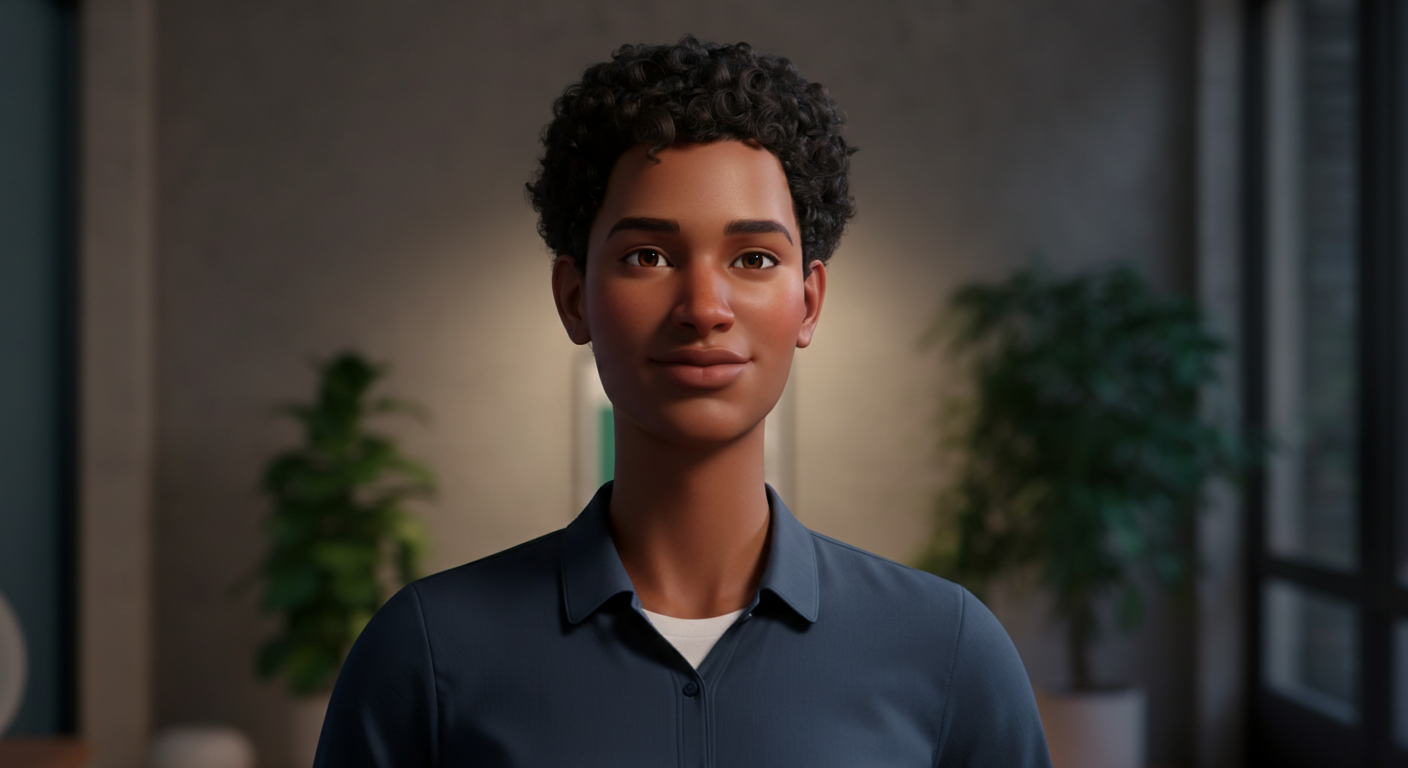
Google has added two capabilities to Google Vids that transform it from a slide-to-video converter into a full AI video production platform: personalized avatars generated from a selfie and voice recording, and Gemini Omni for multi-modal prompt-to-video creation. The update ships inside Google Workspace at the Business Standard tier, which costs $12 per user per month. For founders building AI video tools, this is the moment the category shifted from premium add-on to commodity feature bundled into the enterprise stack. Eighty percent time savings versus manual production has been reported by early adopters, but that efficiency gain now belongs to Google's distribution, not to any standalone tool.
What Google Vids Does Now
Vids launched originally as an AI-assisted workplace presentation tool that converted Google Slides into narrated videos. The July 2026 update adds two entirely new dimensions. The first is personalized AI avatars. A user uploads a selfie and a short voice recording, and Vids generates a digital avatar that looks and sounds like them. The avatar can be placed into video scenes with custom backgrounds, stock footage from the Vids content library, or screen recordings. Google ties each avatar to the user's Google account and watermarks all output invisibly with SynthID, its deepfake detection technology. Access is restricted to users aged 18 and older in eligible regions. The second addition is Gemini Omni, Google's multi-modal model, which lets users create videos from a combination of a text prompt and reference images. Omni handles everything from generating the initial video to swapping backgrounds to fixing lighting on footage recorded from a phone. It also supports step-by-step editing, meaning users can make incremental changes instead of regenerating the entire video when something is off.
Pricing and Positioning Matter More Than Features
The strategic significance of this update is not the technology itself. It is the distribution and pricing. Vids is included in Google Workspace Business Standard ($12 per user per month) and Enterprise plans. Any organization already paying for Workspace gets Vids at no additional cost. Compare that to Synthesia at $22 per month for a single editor seat, or HeyGen at $24 per month for the creator plan, or D-ID at $27 per month. The delta is not small. For a company with 200 Workspace users, video creation is effectively free. The standalone tools now have to justify a premium price against a platform product that keeps improving. Google also integrates Vids directly with Drive, Slides, and Meet recordings, creating a workflow lock-in that no independent vendor can replicate. A user can start from a Google Slide deck, convert it to a Vids project, add an AI avatar, pull stock footage from the library, and publish the result directly to Drive. Switching costs are real when the tool is embedded in the daily work OS.
What This Means for AI Video Startups
For Synthesia, HeyGen, Captions, and D-ID, the Google Vids launch represents a structural threat. These companies raised hundreds of millions of dollars collectively on the thesis that AI video generation would be a standalone SaaS category. Google just proved that the platform owner can absorb the feature and distribute it at marginal cost. The same dynamic played out in document creation, spreadsheets, and presentation software. The lesson is that platform bundling is the hardest competitive force to defend against, because the platform does not need to charge for the feature. The market may not vanish overnight. Enterprise procurement cycles are slow, and trust in Google's AI safety and watermarking may vary by industry. Healthcare, finance, and legal sectors may prefer dedicated tools with compliance certifications that Google has not yet earned. There is also a quality gap: Google's avatars are tied to a single selfie and voice recording, while Synthesia offers 140+ pre-built avatars with professional studio quality. But the gap will close, and the price differential will not.
Where Founders Should Compete Now
The Google Vids launch clarifies the strategy for any founder in the AI video space. Competing on general-purpose video creation for business communication is now a losing bet against the platform. The differentiation window is narrow. The three areas that remain defensible are specialized vertical workflows, fidelity beyond Google's baseline, and integration depth Google cannot match. Specialized verticals include medical training videos that require HIPAA-compliant infrastructure, compliance video for regulated industries with audit trails, and financial services content with FINRA-approved workflows. These are not Google's priority. Professional quality and customizability also remain a gap: studios that need multi-actor scenes, custom 3D environments, lip-sync precision for multiple languages, or fine-grained control over avatar expressions have no reason to switch to Vids yet. Finally, there is the integration play. Google Workspace is not the only ecosystem. Tools that integrate deeply with Salesforce, HubSpot, or Zendesk for sales enablement video, support documentation, or customer onboarding have distribution advantages Google cannot replicate. The next wave of AI video companies will not try to beat Google on breadth. They will win on depth in markets Google finds too small or too complex to address.