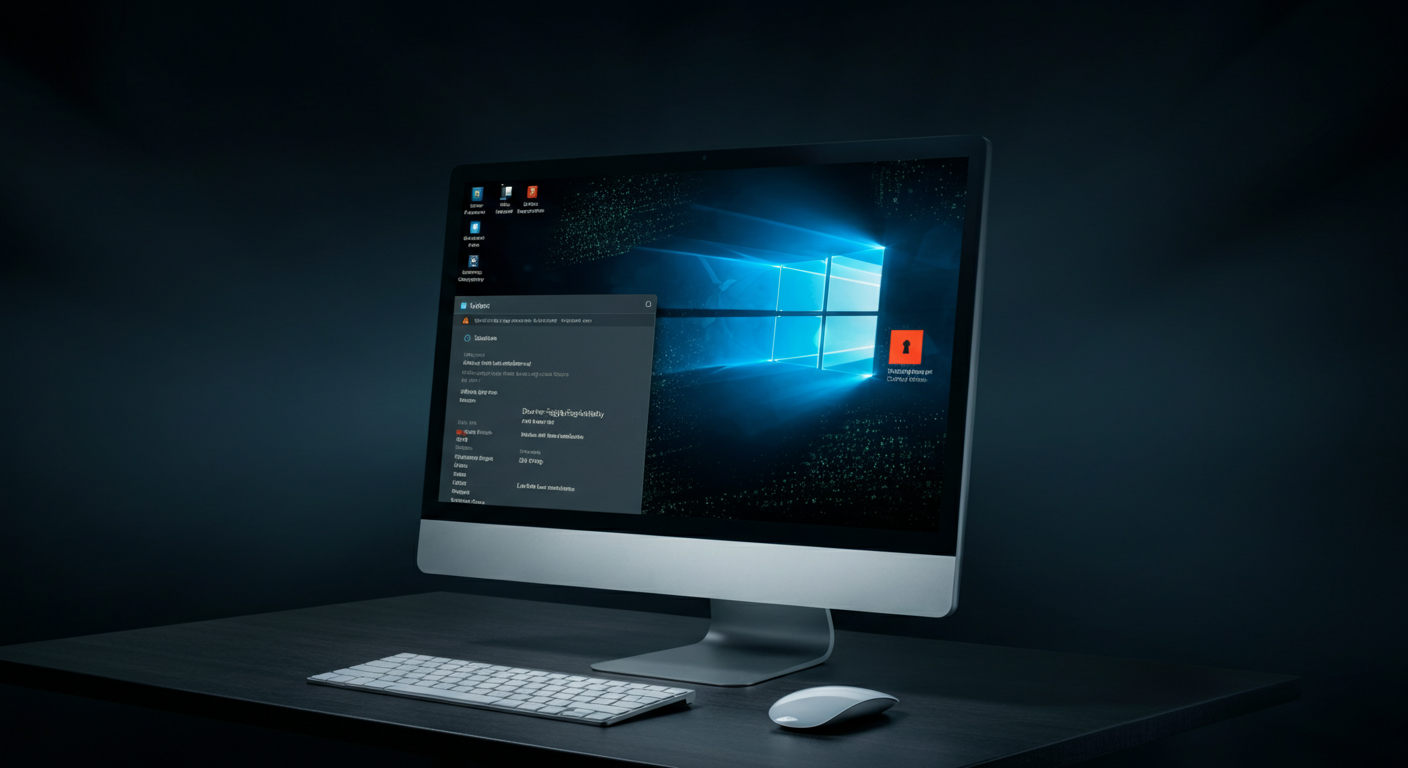
A thread about LG monitors quietly pushing software through Windows Update reached 968 points on Hacker News this week, and the number matters less than the question it forces: what happens when hardware vendors learn they can ride the driver signing trust model to install anything they want on your machine? LG's OnScreen Control is not arriving as an optional download or a checkbox during setup. It is delivered as a driver package through Microsoft's own update pipeline, signed by the same process that vouches for legitimate hardware support, and it lands silently the moment a compatible monitor is plugged in.
How A Monitor Became A Software Delivery Channel
The technical mechanism is deceptively simple. Windows Update treats monitor connected events as a trigger for driver matching. LG bundled its OnScreen Control user space application inside a package that the system classifies as a monitor driver. Because the package passes through Microsoft's Windows Hardware Quality Labs (WHQL) signing, Windows trusts it implicitly and installs without prompting. The app then registers itself to run at startup, collects usage telemetry, and resists standard removal; users report that only manual registry edits remove it, and that it often reinstalls on the next update cycle.
This is not the first time a trusted hardware path became a sneaky software conduit. In 2015 Lenovo shipped Superfish, a man in the middle ad injector preinstalled on consumer laptops that broke HTTPS trust. Around the same time Dell shipped eDellRoot, a self signed root certificate that exposed machines to trivial spoofing. Both abused OEM privilege rather than the Windows Update driver channel, but the pattern is identical: a hardware vendor exploits a trust boundary that end users cannot see to push unwanted code. LG's twist is that it uses Microsoft's signature, not its own BIOS or image, which makes the abuse harder to flag and easier to scale.
The Hidden Scale Of An Unmanaged Install Base
Estimating reach is uncomfortable because the trigger is physical. Any Windows 10 or 11 PC that connects an LG monitor, in homes, offices, and call centers, becomes a candidate for silent install. With LG among the top global monitor shippers, the potential footprint is tens of millions of endpoints, most owned by people who will never open Device Manager. The package reinstalling after removal suggests the update server treats the app as a required driver dependency, not an optional extra, which means the only durable fix today is blocking the hardware ID at the enterprise level.
The root issue is that Microsoft's signing process does not separate kernel drivers from user space applications bundled in the same cab. A display driver that lets Windows set the right resolution is genuinely useful and low risk. A telemetry collecting app that starts on boot is a different class of software with different privacy exposure. By signing both as one unit, WHQL effectively launders the app's reputation through the driver's necessity. We should expect Microsoft to face pressure to split signing tracks, requiring explicit consent for any non driver payload regardless of how it arrives.
Regulators Are Watching The Wrong Layer
The Federal Trade Commission has historically pursued deceptive practices when software installs hide their behavior or make removal difficult. LG's app checks both boxes, and the silent reinstall looks like the kind of pattern that drew action against Sony's rootkit and Roaring Penguin's bundled toolbars years ago. Under the FTC Act's unfairness authority, a vendor that uses a trusted OS channel to bypass user choice could face orders, fines, or mandated uninstall flows. A class action is also plausible given the telemetry collection and the registry only removal barrier.
In the EU, GDPR adds a sharper edge. Telemetry that identifies usage without informed consent is a data processing violation, and the fact that the install is automatic undermines any argument of implicit agreement. Microsoft's WHQL process shares responsibility because it validated the package as safe; regulators may ask why a quality program did not catch a non driver app with startup behavior. We predict a tightening of the Windows Hardware Compatibility Program to require declared payload inventories, with user space apps flagged for separate review and consent.
Where Founders Should Move Now
For security tool founders, this incident is a product thesis. There is clear demand for a Windows Update audit layer that inspects driver packages before install, extracts embedded executables, and flags user space apps masquerading as drivers. Build a CLI or agent that scans pending driver updates, compares declared INF contents to actual payloads, and alerts on telemetry binaries. Enterprise buyers will pay for fleet visibility into what their monitors are actually deploying.
Hardware founders should treat LG's reception as a warning. Shipping companion software through update channels without consent is a compliance landmine that can sink a product line's reputation. Design separate, opt in installers for any app, keep driver packages minimal, and document data flows for regulators. Enterprise IT teams need immediate policy: block the LG package via Windows Update for Business or Group Policy, inventory endpoints for OnScreen Control, and monitor hardware ID driven installs as a new attack surface. The monitor on your desk is now a software vendor, and that changes how we secure the edge.