
Seven billion dollars. That is the valuation attached to Neko Health after the Swedish preventive health startup closed a $700 million Series C round, marking one of the largest healthcare technology fundraises of the year. Founded by Spotify creator Daniel Ek and entrepreneur Hjalmar Nilsonne, Neko Health is using artificial intelligence to transform the full-body health scan from a niche luxury into a scalable preventive care tool. The company now plans to bring its technology to the United States for the first time, opening a flagship clinic in New York City.
What Neko Health Actually Does
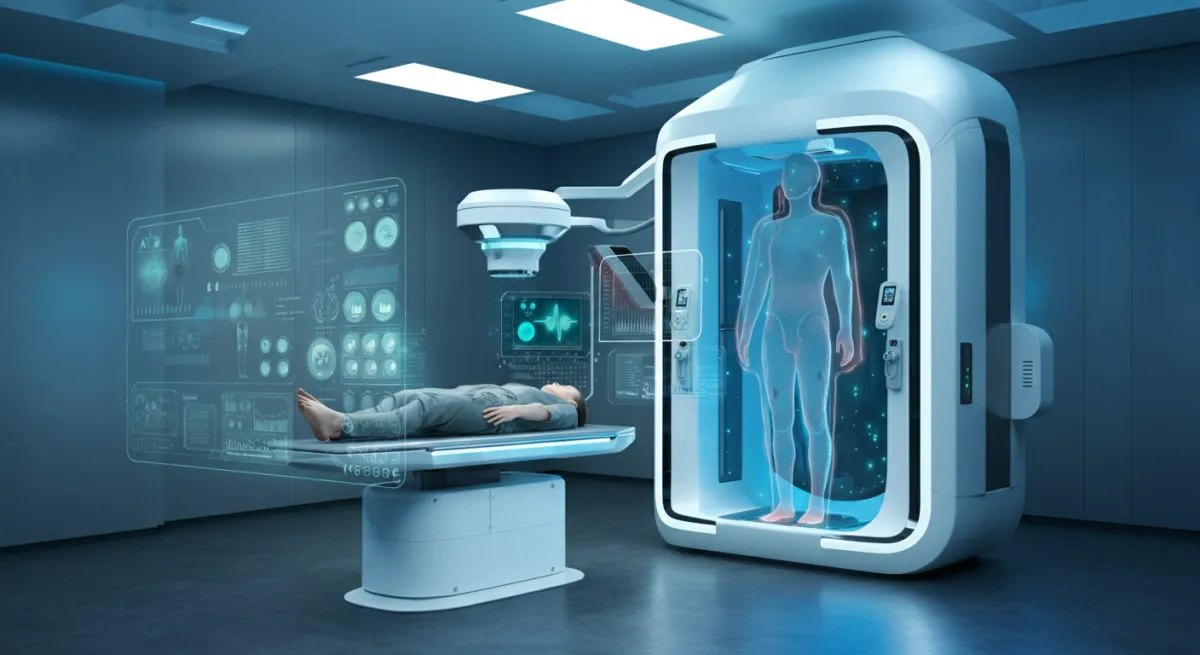
Neko Health operates fixed-location clinics where patients receive a comprehensive, non-invasive body scan that takes approximately 30 minutes. The scan captures over 50 million data points across the body, including cardiovascular metrics, skin lesions, organ composition, and metabolic markers. An AI system then analyzes the results alongside a physician's review to generate a personalized health report. Unlike traditional annual physicals that rely on blood work and basic vitals, Neko's approach aims to detect early warning signs of conditions like heart disease, type 2 diabetes, and certain cancers years before symptoms appear. The company has already scanned tens of thousands of patients across its European clinics, building what it calls the world's most detailed longitudinal health dataset.
A $700 Million Bet on Preventive Health
The Series C round was led by General Catalyst, with participation from existing investors including Prima Materia (Ek's own investment vehicle), as well as new backers that reportedly include Mark Zuckerberg's personal investment office. The round values Neko Health at nearly $7 billion, more than double its previous valuation. To put that figure in context, Neko Health now commands a higher valuation than many publicly traded digital health companies. The capital will fund three initiatives: opening U.S. clinics beginning with New York, scaling the AI diagnostic engine with more training data, and hiring clinical staff to meet anticipated demand. The startup previously raised a $30 million Series A in 2023 and a 60 million Series B in 2024, giving it a total of over $760 million in funding to date.
Why the U.S. Market Matters for AI-Driven Diagnostics
The United States represents the largest and most lucrative market for preventive health scanning, but it is also the most fragmented. Healthcare in America operates through a patchwork of insurance providers, employer wellness programs, and direct-to-consumer models. Neko Health's cash-pay model, with scans priced competitively per session, sidesteps the insurance reimbursement complexity that has slowed many digital health startups. That pricing places it in the range of a high-end spa or dental procedure, accessible to a broad professional demographic without requiring insurance buy-in. If Neko can prove that its scans reduce downstream healthcare costs by catching disease early, employers and insurers may ultimately subsidize the service. Competitors including Prenuvo and Ezra have already established footholds in the U.S. market, but none have Neko's combination of celebrity founder backing, AI infrastructure, and sheer capital firepower.
What This Means for Founders and the AI Health Landscape
Neko Health's massive raise sends a clear signal to founders building in the AI diagnostics space: investors are willing to write enormous checks for companies that combine hardware, AI software, and a clear go-to-market plan. The $7 billion valuation is not just about the technology. It reflects investor confidence in the thesis that consumers will pay out of pocket for actionable preventive health insights when the experience is streamlined and the results are clinically meaningful. For solo founders and small teams evaluating where to build, the AI health vertical offers a rare combination of deep technical moats and direct consumer willingness to pay. The key lesson from Neko is that the winning approach integrates the scan hardware, the AI analysis layer, and the clinical delivery into a single cohesive experience, rather than selling point solutions to hospitals or clinics. Expect more startups to attempt similar vertically integrated models in adjacent areas such as metabolic health, dermatological screening, and cognitive decline detection.
The question now is whether Neko Health can replicate its European success in the fiercely competitive U.S. healthcare market. The company must navigate state-level medical licensing, build brand trust from scratch, and manage the logistical complexity of opening multiple clinics simultaneously. If it succeeds, Neko Health could become the template for how AI-native healthcare companies expand globally. If it stumbles, the $700 million round will stand as a cautionary tale about the gap between impressive technology and real-world healthcare delivery.