
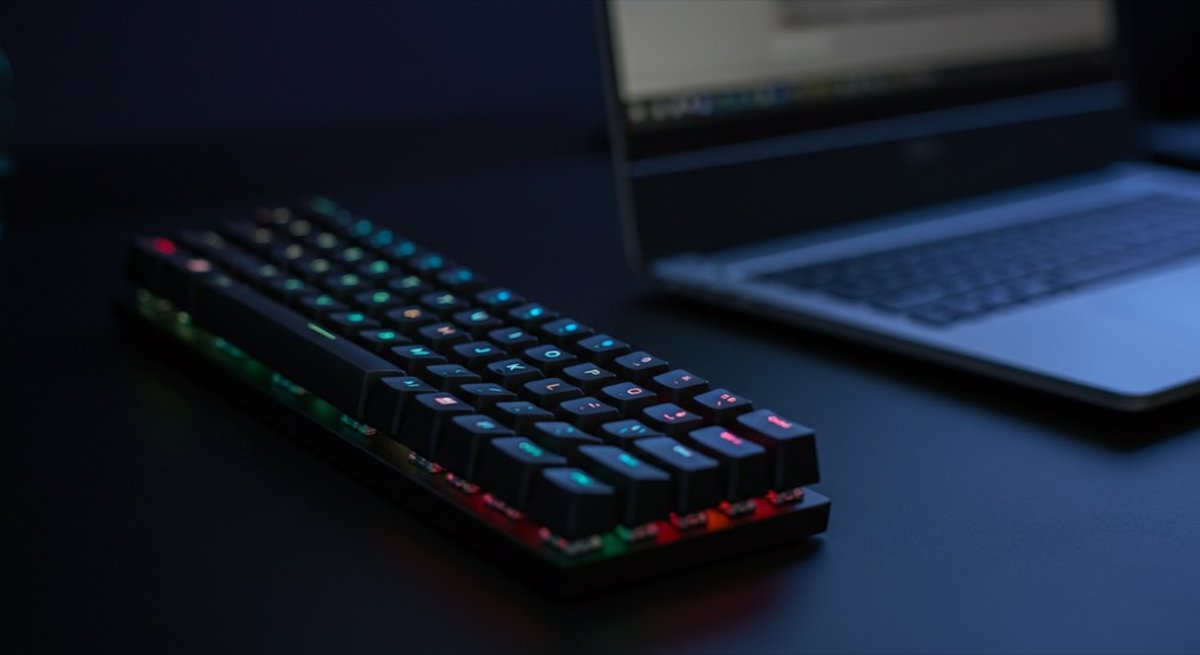
OpenAI just released its first consumer hardware product: a $230 macro keyboard called the Codex Micro, co-designed with keyboard boutique Work Louder. The device is not a gimmick. It is a deliberately narrow tool built for one specific workflow managing AI coding agents inside Codex, OpenAI's agentic development environment. And it arrives while the company is fighting a lawsuit from Apple over allegations that it stole hardware design trade secrets.
The Codex Micro sits next to a developer's existing keyboard rather than replacing it. It features an array of programmable backlit keys that map to specific agent-management actions: accepting or rejecting suggested code changes, switching between multiple active agent contexts, rolling back a series of edits, or launching parallel agent workflows. Each key's function is color-coded so the developer can see at a glance which agents are running and which actions are available.
What the Keyboard Actually Does
Developers using Codex today interact with their AI agents through chat panels, hotkeys, and context menus. The Codex Micro replaces several of those steps with dedicated physical keys. A developer managing three agents working on different parts of a codebase can press a key to switch focus, press another to accept an agent's changes, and press a third to kick off a test suite all without touching their mouse or navigating away from their primary editor window.
The keyboard connects via USB-C and is fully programmable. OpenAI has published a tool that lets developers remap every key, customize the color scheme per project, and create macros that chain multiple agent commands into a single press. Work Louder, which previously built keyboards for pro gamers and streamers, contributed the mechanical switch design, the aluminum frame, and the under-key RGB lighting system.
At $230, the Codex Micro is priced more like a premium mechanical keyboard keycap set than a full peripheral. OpenAI is not trying to sell millions of units. It is targeting a specific cohort: power users of Codex who spend hours each day reviewing and directing AI-generated code. For those users, the value proposition is clear. If a physical key saves even a few seconds per agent interaction, the keyboard pays for itself in developer productivity within weeks.
A First Hardware Product Under Legal Scrutiny
The timing of the release is notable for a reason beyond the product itself. Apple filed a lawsuit against OpenAI earlier this year alleging that the AI company misappropriated trade secrets related to hardware design. The suit specifically involves a former Apple employee who joined OpenAI's hardware team and allegedly brought proprietary information about Apple's own keyboard and input-device designs.
OpenAI has denied the allegations and moved to dismiss the case. But the proximity of the Codex Micro launch to the lawsuit, and the fact that this is OpenAI's first hardware product, creates a narrative that is hard to ignore. Whether the product was planned independently or influenced by the departed employee's knowledge is a question for the courts. What matters for the market is that OpenAI is now a hardware company, and it is entering a space where Apple has dominated input-device design for decades.
OpenAI's broader hardware ambitions go beyond keyboards. Bloomberg reported earlier this month that the company is developing a screenless speaker that can move on its own, positioning it as a companion device rather than a smart speaker. The device reportedly includes mechanical elements that allow it to express itself through motion, suggesting OpenAI is thinking about hardware not as an accessory but as a physical interface for AI interaction.
What This Means for AI Tool Builders
The Codex Micro validates a thesis that has been emerging in the developer tools space over the past year: as developers spend more time interacting with AI agents, the keyboard itself becomes a competitive surface. Physical I/O for agent workflows, including accept, reject, iterate, and switch context, is not a luxury. It is a productivity bottleneck that dedicated hardware can solve.
For founders building AI developer tools, the takeaway is that agent UX extends beyond the screen. Think about the repetitive physical actions your users perform when working with AI: clicking accept buttons, navigating between agent response panels, scrolling through diffs. Each of those actions is a candidate for a dedicated control, whether a keyboard shortcut, a macro key, or a physical peripheral.
The $230 price point also signals something important about developer willingness to pay for AI productivity. OpenAI believes developers will spend premium dollars on hardware that makes AI workflows faster. If that bet pays off, it opens a new category for AI-native peripherals. Not just keyboards but input devices designed specifically for agent interaction, code review, and prompt engineering.
For startups considering the AI hardware space, the Codex Micro sets a template: identify a narrow, high-frequency interaction pattern in an AI workflow, build a dedicated physical control for it, and charge a premium price to power users who measure their time in billable hours or shipping velocity. The general-purpose smart speaker market is crowded and low-margin. The niche AI-peripheral market is wide open.
OpenAI's move into hardware also raises strategic questions for the rest of the AI industry. If Anthropic, Google DeepMind, or Meta's AI division follow with their own peripherals, the keyboard could become a platform battleground. A developer using a Codex Micro is locked into the OpenAI ecosystem in a way that software alone cannot replicate. That ecosystem lock-in, physical, visible, sitting on the desk, may be the most valuable outcome of this product launch.