
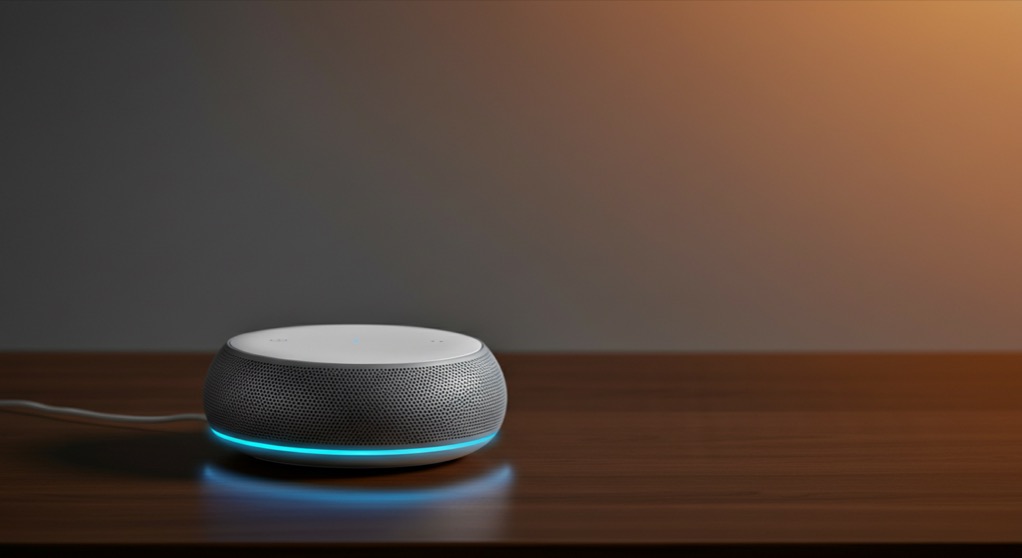
OpenAI is developing a screenless speaker that can physically move on its own, marking the company's first venture into consumer hardware and a significant bet that the next computing paradigm will be embodied AI presence. According to Bloomberg, the device includes mechanical elements that allow it to move autonomously, positioning it less as a smart speaker competing with Amazon Echo or Google Nest and more as an AI companion - a physical manifestation of ChatGPT that can express itself through motion, interact through voice, and potentially form emotional bonds with users.
The project, which has been in development for over a year inside OpenAI, represents a fundamental shift in how the company thinks about human-AI interaction. Rather than building another screen-based device or a passive speaker, OpenAI is betting that movement and physical presence will be the interface that makes AI feel alive rather than functional. The device is separate from the Codex keyboard hardware initiative also reportedly in development, suggesting OpenAI is pursuing multiple hardware strategies simultaneously.
From Chat Interface to Physical Presence
The move from screen to screenless, from static to moving, is not merely a design choice. It reflects a deeper thesis about what makes AI feel real to humans. Research in human-robot interaction has consistently shown that physical movement - even simple gestures like turning toward a speaker or tilting in response to emotion - dramatically increases how alive and trustworthy users find an AI system. OpenAI appears to be banking on this phenomenon to differentiate its hardware from the crowded smart speaker market.
Bloomberg's reporting indicates the device is designed to feel like a companion and become a physical manifestation of OpenAI. That language is carefully chosen. It suggests OpenAI is not building a tool you query for weather forecasts and timers. It is building a presence you share space with. A thing that can move toward you when you enter a room, turn away when you are busy, or express curiosity through motion. These are behaviors associated with living beings, not appliances.
For context, the smart speaker market has largely stagnated. Amazon Echo sales have declined year over year since 2021. Google Nest has been deprioritized internally. Apple's HomePod never achieved mass adoption. The category has been defined by utility - setting timers, playing music, answering questions - and users have shown limited willingness to engage beyond those narrow use cases. OpenAI is essentially saying the problem was not voice interfaces. The problem was that no one built a device worth talking to.
Why Movement Matters for AI Companionship
The mechanical movement detail is the most strategically significant element of this report. Static speakers are ambient background objects. Moving speakers are something else entirely. When a device can orient itself toward you, shift its position to follow conversation, or express emotional states through motion, it crosses a threshold from appliance to entity.
This is not speculative. Sony's Aibo robot dog, launched in 1999 and revived in 2018, demonstrated that users form genuine emotional attachments to robotic companions. Users name them, talk to them, and report feeling comfort from their presence. The difference with OpenAI's approach is that the intelligence behind the movement is a frontier AI model, not a scripted behavior tree. The device can have actual conversations, remember context, and adapt its personality over time.
Several startups have already begun exploring this space. Physical AI companion companies like Miko, Embodied's Moxie, and even the revived Aibo have shown that there is a market for devices that occupy the space between pet and assistant. But none of them have the AI capabilities that OpenAI can bring to bear. If OpenAI ships a device that combines GPT-class intelligence with physical embodiment, it could define an entirely new product category the same way the iPhone defined the smartphone.
The timing is also strategic. Apple's Vision Pro has struggled to find a mass market. Meta's smart glasses are still niche. The AR/VR headset approach to computing has not resonated with mainstream consumers. A device that requires no headgear, no screen, and no learning curve - just a voice and a physical presence - could be the interface that finally brings AI into everyday life for hundreds of millions of people.
The Hardware Graveyard and OpenAI's Path Forward
OpenAI is entering a market where the largest technology companies in the world have failed to find sustained success. Amazon invested billions in Alexa and the Echo ecosystem, reportedly losing over 10 billion dollars on the division in 2022 alone. Apple's HomePod was discontinued after poor sales, then quietly revived with a cheaper model that still commands less than 10 percent market share. Google has repeatedly reorganized its hardware division and deprioritized smart speakers relative to other initiatives.
The reasons for these failures are well documented. Smart speakers solved a problem that most people did not have. They were useful for a narrow set of tasks but not indispensable for any of them. Users placed them in kitchens and living rooms, used them for music and timers, and largely stopped exploring new use cases after the first few weeks. The devices became furniture rather than companions.
OpenAI's bet is that the problem was never the hardware form factor. It was the intelligence behind it. Alexa and Google Assistant are task-oriented systems designed to execute commands. They do not remember your preferences across sessions unless explicitly programmed. They do not initiate conversation. They do not express curiosity or emotion. They are tools, not companions. By contrast, ChatGPT-based systems have demonstrated the ability to maintain coherent, context-aware conversations over extended periods, remember user information, and express personality.
The risk is significant. Hardware is capital intensive, supply chain dependent, and subject to razor-thin margins. OpenAI has never shipped a physical product. The company would need to build manufacturing partnerships, distribution channels, and customer support infrastructure from scratch. Bloomberg's report suggests the device is still in development and may not ship for months or longer. In the meantime, competitors like Google, Amazon, and Anthropic are also exploring companion-style AI interfaces.
What This Means for Founders
For founders and operators, OpenAI's hardware ambitions validate a thesis that has been building for years: the AI companionship market is real and will be a major battleground. The key takeaway is not that OpenAI is building a speaker. It is that the company believes the next interface paradigm is physical, ambient, and emotionally engaging rather than screen-based and transactional.
Startups building in the AI companion space, from virtual friends to physical robots, now have a major validation signal from the most important AI company in the world. The mechanical movement detail in particular suggests that investors and acquirers will be interested in hardware startups that can deliver expressive, affordable physical AI interfaces.
Several strategic questions emerge. Will users pay a recurring subscription for a hardware companion, or will the business model be one-time hardware sales with optional premium AI tiers? Can OpenAI manufacture at scale without the supply chain expertise of Apple or Amazon? And perhaps most importantly, will the device actually be good enough that people want to share their living space with it, or will it join the Echo and HomePod in the gadget graveyard?
The answers to these questions will determine not just OpenAI's hardware fate, but whether the AI companion category becomes the next big computing platform or the next smart speaker disappointment. For now, the signal is clear: the race to define physical AI presence has begun.