What happens when a group of Caltech physicists accidentally disproves their own skepticism about quantum computing? You get Oratomic, a startup that raised $300 million in one of the largest Series A rounds in deep tech history, and it is betting that the path to a useful quantum computer is dramatically shorter than anyone believed.
The round was co-led by ARCH Venture Partners, Spark Capital, and Khosla Ventures, with Bezos Expeditions, Index Ventures, General Catalyst, Lowercarbon Capital, and Bain Capital also participating. Vinod Khosla called it his firm's largest initial investment ever. That kind of conviction from a veteran investor who has backed everything from Sun Microsystems to OpenAI signals that this is not another speculative quantum bet.
The Breakthrough That Changed Everything
Oratomic's founders were not looking to start a company. CEO Dolev Bluvstein told TechCrunch that none of the Caltech physicists who founded Oratomic would have been persuaded to launch a quantum computing startup before their discovery. The reason was simple: they believed practical quantum computers were too far away to commercialize. That calculation changed when the team made a breakthrough in error correction that slashed the number of qubits needed to build a useful machine.
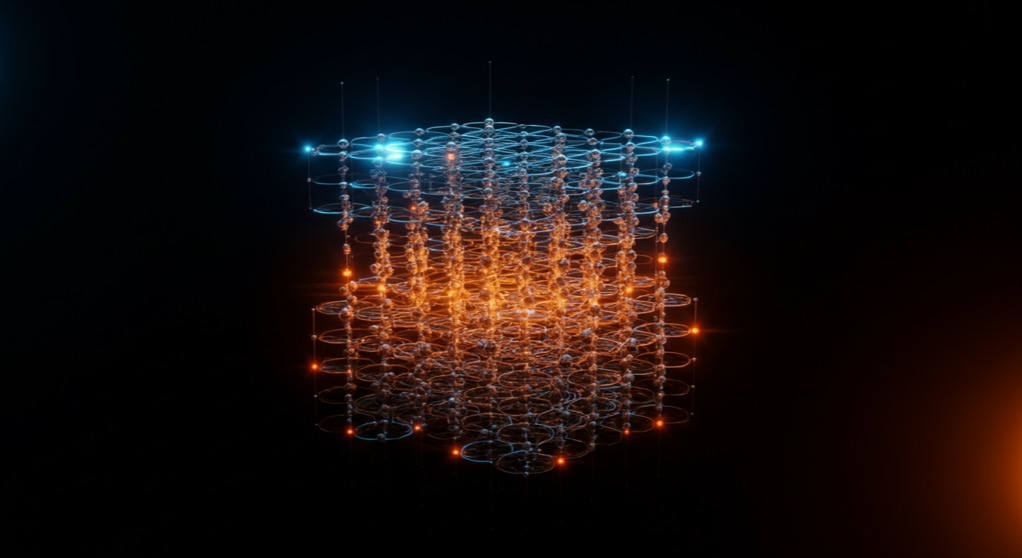
Most quantum computing approaches require millions of qubits to achieve fault tolerance because error correction consumes most of the available qubits. Oratomic's approach uses optical tweezers lasers that trap individual atoms in place as the fundamental building block. The team discovered that this architecture can correct errors using an order of magnitude fewer qubits. Instead of needing a million qubits to get a few thousand logical qubits, Oratomic needs only 10,000 to 20,000 physical qubits to build a useful computer. And here is the critical detail: they have already demonstrated all of the core components at a smaller scale in the lab.
Bypassing the NISQ Trap
Nearly every quantum computing company today operates in the NISQ era noisy intermediate-scale quantum. These are machines that work well enough for researchers to experiment with but fall short of the fault tolerance needed for real-world commercial applications. Companies like IBM, Google, and Rigetti sell access to NISQ machines, charging cloud compute fees while they work toward a fault-tolerant future.
Oratomic is skipping that stage entirely. It has no plans to sell or develop NISQ systems. The company is going directly for utility-scale fault-tolerant quantum computing, targeting commercial viability by the end of this decade. This is the same strategy that PsiQuantum, valued at $7 billion last September, has adopted. But Oratomic argues its approach is fundamentally simpler and less expensive because it requires roughly 50 times fewer qubits. PsiQuantum targets a million-qubit machine. Oratomic targets 20,000.
That gap matters for more than just bragging rights. Fewer qubits means smaller vacuum systems, less laser infrastructure, lower power consumption, and a faster path to manufacturing. In hardware startups, component count is the single best predictor of timeline risk. Oratomic's architecture has fewer components by design.
What the $300M Series A Actually Buys
A $300 million Series A is unusual in any industry. It is almost unheard of in quantum computing, where the capital requirements are typically spread across multiple rounds over a decade. The size of this round tells you something about the competitive landscape. Quantum computing has entered a phase that looks like the early GPU wars. Infleqtion and Quantinuum went public this year. Rigetti and IonQ have seen their share prices surge over the past 18 months. The window for establishing a dominant position is closing, and Oratomic is using its capital to compress years of development into months.
The funding will go toward scaling the system from lab demonstration to full-scale deployment. That means building the laser arrays, the vacuum chambers, the control electronics, and the software stack needed to operate a 20,000-qubit machine. It also means hiring the engineering team that can take a Caltech physics breakthrough and turn it into a product that enterprises can actually buy and operate.
What This Means for Founders Building With AI
Quantum computing and AI are converging faster than most startup founders realize. The same complex calculations that quantum computers will accelerate optimization problems, molecular simulations, cryptographic analysis are the ones that next-generation AI systems will need to handle. Oratomic's timeline places a practical quantum computer within reach by 2030, which means founders building products today need to start thinking about three things.
First, post-quantum cryptography is not a 2040 problem anymore. If Oratomic delivers on its 2030 target, any data encrypted today with RSA or ECC will be vulnerable within a decade. Startups handling sensitive data long-term healthcare records, financial transactions, government contracts should begin evaluating post-quantum migration paths now. The window for action is shorter than most security teams appreciate.
Second, quantum-classical hybrid architectures will create a new middleware layer. The first practical quantum computers will not replace classical hardware. They will sit alongside it, handling specific subroutines while GPUs and CPUs handle the rest. Companies that build the orchestration, scheduling, and data transfer layers between classical and quantum systems will own a critical piece of infrastructure that every quantum user will need.
Third, the talent arbitrage window is open. Quantum computing expertise today is concentrated in academic labs and a handful of startups. Oratomic's $300 million raise, combined with the public listings of Infleqtion and Quantinuum, means the quantum talent market is about to get competitive. Startups that hire quantum-aware engineers now while the pool is still affordable will have a structural advantage when this market reaches mainstream adoption.
Oratomic has not built its full-scale machine yet. But it has done something more important: it has demonstrated that the physics works, raised the capital to scale it, and convinced a set of the world's most sophisticated deep tech investors that the bet is real. For founders building in adjacent spaces, the signal is clear. The quantum clock is ticking faster than the headlines suggest, and the companies that prepare for it now will be the ones that benefit when the first fault-tolerant machine goes online.