
San Francisco Mayor Daniel Lurie has formally asked California state regulators to tighten the rules governing autonomous vehicles, citing two high-profile incidents in which Waymo robotaxes became a liability rather than a solution during major disruptions. The letter, sent to the California Department of Transportation, marks a turning point for a mayor who once championed the city as a living laboratory for emerging technology.
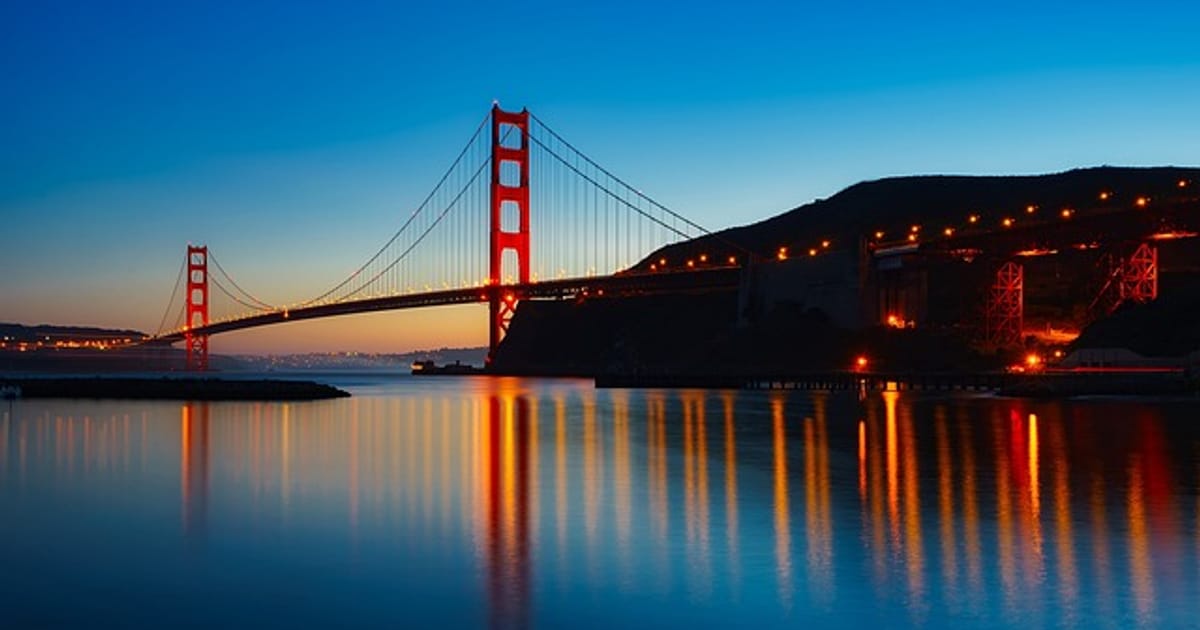
The final straw came on July 4, when more than 100,000 spectators flooded San Francisco's waterfront for the Golden Gate Bridge fireworks show. Despite a pre-planned geofence intended to manage traffic around the event, dozens of Waymo robotaxis became immobilized in the crush, blocking key travel lanes, running out of battery power, and compounding gridlock for hours. Municipal Muni shuttle buses became trapped in the same congestion, and tow trucks dispatched to recover disabled vehicles took three to four hours to reach them.
It was the second major failure in months. In December 2025, a widespread power outage left nearly 130,000 San Franciscans without electricity. Traffic signals went dark across roughly one-third of the city, and autonomous vehicles stopped in intersections, blocking major streets and snarling emergency response routes. The pattern, Lurie argues, exposes a dangerous blind spot in California's current regulatory framework.
The Four Tests Every Robotaxi Must Pass
In his letter, Lurie laid out four specific "core operational capabilities" that autonomous vehicle manufacturers should be required to demonstrate before and during deployment. First, companies must be able to immediately remove or relocate robotaxis from active travel lanes so that normal traffic can resume. Second, vehicles must adapt in real time, adjusting their routes, service area, and pickup and drop-off locations as conditions change. Third, operators must share real-time operations data with local agencies, including service disruptions, the precise locations of immobile vehicles, and recovery progress. Fourth, companies must prove through testing that their fleets can handle sudden large influxes of people and vehicles.
The subtext is clear: California's current permitting system evaluates autonomous vehicle performance under normal conditions, but it does not stress-test fleets against the chaos of real-world city life. A robotaxi that navigates a quiet residential street perfectly may be useless or even dangerous when 100,000 people pour onto the waterfront after a fireworks show.
Waymo Pushes Back, but the Data Is Not on Its Side
Waymo responded to the mayor's letter with a statement noting that the company has successfully supported several major San Francisco events, including FIFA World Cup games, the Super Bowl and Fan Fest, and NBA All-Star Weekend. Spokesperson Katherine Barna said Waymo will continue to partner with the city on learnings from the millions of rides already provided.
That defense, however, may not hold up to scrutiny. The July 4 incident was not an edge case. It was a predictable event on a fixed calendar, yet the fleet failed. Christopher White, executive director of the San Francisco Bicycle Coalition, told CBS News that the celebration "demonstrated how quickly autonomous vehicles can contribute to gridlock when traffic conditions become unpredictable." Marc Vukcevich, director of state policy for Streets For All, highlighted the broader public safety risk: "Anytime the public right of way suddenly is clogged or not moving anymore, there's substantial concerns."
Waymo is operated by Alphabet, one of the most well-resourced companies on the planet. If its fleet cannot handle a planned holiday fireworks show, that raises uncomfortable questions about readiness for unplanned emergencies such as earthquakes, fires, or active shooter scenarios where every minute counts.
What This Means for Autonomous Vehicle Companies and Founders
The mayor's letter is more than a local political gesture. It signals a broader regulatory shift that every autonomous vehicle company should be watching closely. California is the single most important market for robotaxi operators in the United States. If the state adopts the mayor's proposed standards, they will likely become the de facto national benchmark, influencing policy in New York, Texas, and beyond.
For startup founders building autonomous vehicle technology, the takeaway is clear: operational reliability in edge cases is no longer optional. The era of testing under controlled conditions is ending. Regulators are now asking the hard questions about fleet recoverability, real-time data sharing, and emergency response integration. Companies that cannot demonstrate these capabilities risk being locked out of the most lucrative markets.
The incident also underscores a deeper challenge for the entire autonomous vehicle industry: public trust. When a fleet of robotaxis traps a city's residents in gridlock on a holiday evening, every passenger in every other robotaxi is reminded that the technology is still imperfect. Trust takes years to build and can be shattered in a single evening. The companies that survive this regulatory tightening will be those that treat resilience and recovery as first-class engineering features, not afterthoughts.
Lurie's letter to the state is dated July 16, 2026. The California Department of Transportation has not yet issued a formal response, but the clock is ticking. For Waymo and every other operator with vehicles on San Francisco streets, the rules of the road are about to change.