
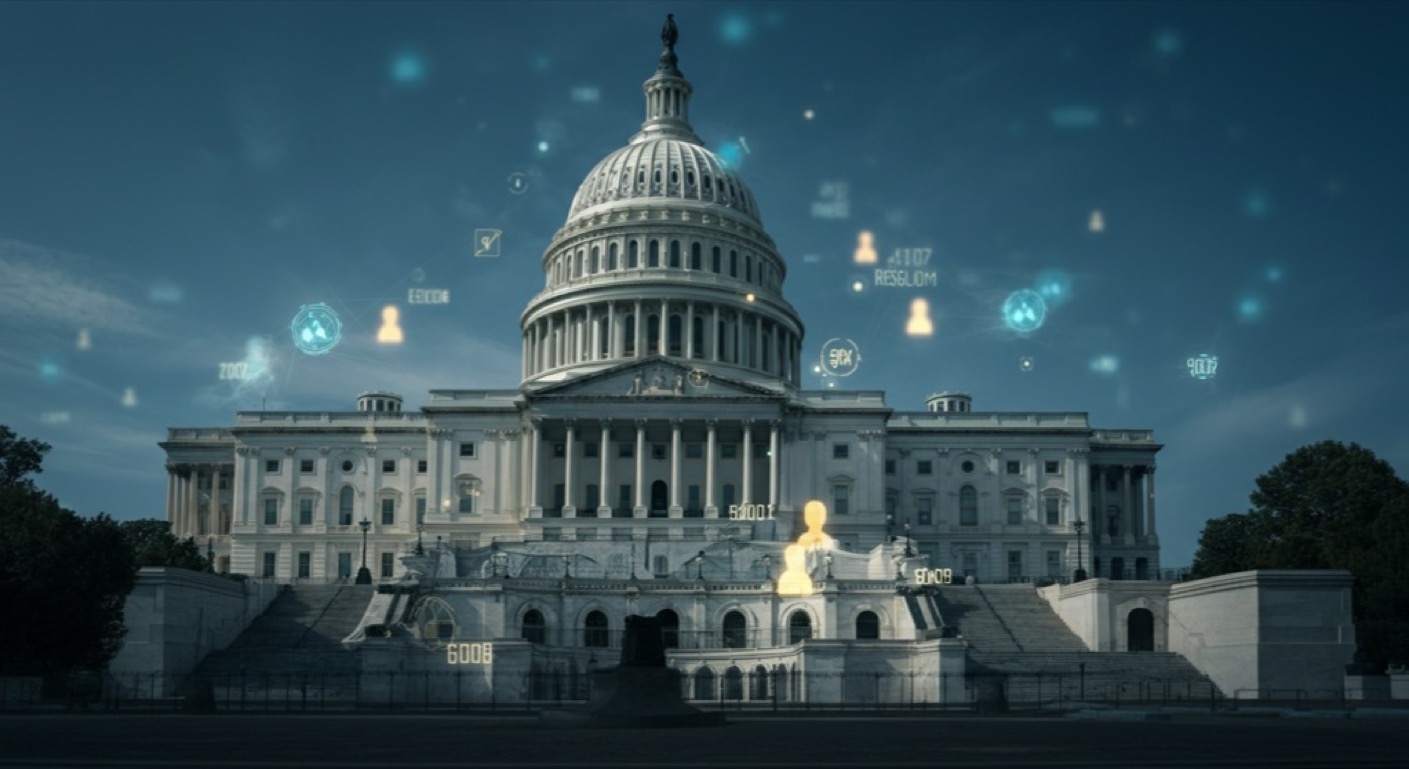
On June 29, 2026, Senator Mark Warner (D-VA) released a discussion draft of the AI AGENT Act (Artificial Intelligence Access, Gatekeeper Exchange, and Nondiscriminatory Transfer Act of 2026). It is the first draft federal law anywhere to specifically target agentic AI power. For founders building AI agents, AI assistants, or AI-powered platform tools, this is the most consequential piece of legislation in play right now. If enacted, it would fundamentally reshape how consumers interact with large platforms and open distribution channels that are currently locked inside walled gardens.
What the AI AGENT Act Actually Does
The Act is structured as an e-commerce consumer protection intervention run through the Federal Trade Commission. It draws from data portability and number portability precedents, most notably the Telecommunications Act of 1996 and the FCC's 1968 Carterfone decision, which forced monopoly telephone companies to let users attach their own devices to the network. The core mechanism is straightforward: large online platforms with at least 50 million US users must maintain an interoperable interface as a portal for independent AI agents. Through this portal, consumers would have the right to designate and deploy what the Act calls custodial user agents (CUAs) of their choice, rather than being forced to use the platform's built-in AI.
Under the Act, an Amazon consumer could designate her own agent on fair, reasonable, and nondiscriminatory terms to manage purchases on the platform. If the consumer chose to use Alexa instead, Amazon would have to ensure that Alexa acted in the consumer's interests, not Amazon's. The Act explicitly recognizes that agents would bear fiduciary duties to consumers. Professor Ellen P. Goodman of Rutgers Law School, who analyzed the bill in detail, describes it as taking a belt and suspenders approach to user empowerment. It is not enough that users can bring their own agents to the platform. The other main requirement is that all CUAs, including those deployed by the platforms themselves, must faithfully serve the user.
What Fiduciary Duty Means for Agent Builders
This is the key insight for founders building AI agents. The Act's fidelity component draws from the legal concept of the information fiduciary, originally proposed by scholars Jack Balkin and Jonathan Zittrain. An AI agent acting against the interest of a user can do significantly more harm than a targeted ad. The Act's solution requires that providers of CUAs register their agents with the FTC before they can act as a user's representative. The affirmative duties would include acting solely in the user's interest, maintaining transparency about how the agent operates, providing clear records of agent actions, and enabling users to revoke authorization at any time.
For startup founders building agentic AI products, this creates both a massive opportunity and a significant compliance burden. The opportunity is that the Act would force platforms like Amazon, Google, Meta, and Apple to open interoperable interfaces for third-party agents. A user could bring her own shopping agent to Amazon instead of being locked into Alexa. A user could deploy his own content curation agent on Instagram instead of using the platform's algorithm. This is the distribution breakthrough that agent startups have been waiting for. But the compliance burden is real: your agents must meet fiduciary duty standards, acting in the user's interest, not in the platform's or in your own.
The Technical Challenges Nobody Is Talking About
The discussion draft status is a tacit acknowledgement that we do not yet have the technical capabilities to govern agents as specified. The Act requires development of new technical standards for agentic operation and verification: reliable records of what an agent did and why, a kill switch to allow a user to revoke consent from an agent instantly, and security and privacy controls that exceed the current state of the art. Focusing just on the records requirement, it seems reasonable to demand that agents produce reliable chains of thought showing their goals and execution processes. Such a trail might reveal that an agent had gone rogue or was actually working for a third party against the user's interests. But this kind of reliable chain-of-thought explainability is not available now. An OpenAI paper reports that agents may act over an extended period of time without their behavior having been specified in advance, creating many points for deviation from user interests. The Partnership on AI notes that failure at any point can unpredictably shift the agent's course, with errors compounding as the process unfolds.
There are also deeper questions about how an agent can truly gauge the user's interests. Consumers make choices reflecting multivalent and sometimes conflicting considerations of function, social value, and emotional value. An agent trained on a consumer's past behavior risks freezing the self, ossifying consumer identity into an algorithmic profile. These are not problems that can be solved by regulation alone.
What Founders Need to Do Right Now
The discussion draft status means now is the time for founders to provide input on how agentic AI regulation should work. The regulatory question mirrors the net neutrality debate: should AI agents be common carriers for user intent? Founders building AI agents should take five concrete actions today. First, read the full discussion draft text and understand how its provisions affect your product. Second, submit comments to Senator Warner's office during the public discussion period. Third, begin designing your agent architecture with fiduciary duty compliance in mind from day one rather than retrofitting later. Fourth, track the FTC rulemaking process, which will define the specific technical standards for agent certification and registration. Fifth, monitor the Senate AI working group recommendations expected in late 2026, which will heavily influence the bill's final shape.
The outcome of this legislative process will determine whether AI agent startups get a distribution boost from interoperability requirements or face a costly compliance regime that favors incumbents. For founders, the time to engage is now, while the discussion draft is still open for input.