
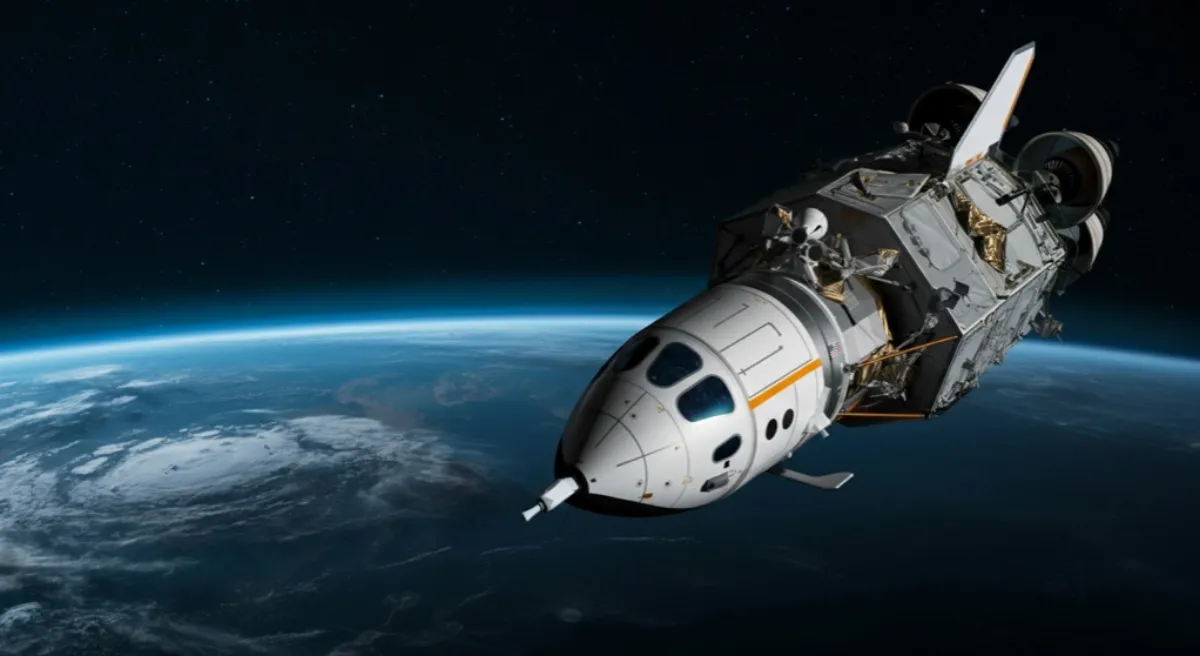
The consolidation of the space industry continues at a blistering pace. Voyager Technologies has completed its acquisition of Astrobotic Technology in a deal valued at up to $300 million, absorbing one of the leading lunar infrastructure companies just weeks after Astrobotic secured nearly $300 million in NASA contracts. The acquisition, which closed on July 13, 2026, immediately rebrands Astrobotic as Voyager Lunar Systems, with former Astrobotic CEO John Thornton remaining at the helm of the new subsidiary.
This is not a fire sale. It is a strategic bolt-on by a company that is methodically assembling the pieces for a multi-orbit future. Here is what happened, what it means, and where this leaves the lunar economy.
The Deal Structure: Cash, Stock, and Milestones
Voyager paid $162 million in a mix of cash and stock upfront, along with assuming $9 million in Astrobotic debt. On top of that, the deal includes up to $129 million in earnout payments tied to reaching specific performance milestones. That earnout structure is notable. It suggests Voyager is betting on Astrobotic's existing contract pipeline and technology roadmap to generate value rather than simply absorbing headcount and intellectual property.
The timing is no coincidence. On June 30, NASA awarded Astrobotic two missions of its smaller Peregrine lunar lander for $298 million. Those missions, set to launch in 2028, will carry identical sets of three NASA payloads with room for additional commercial payloads. That contract alone nearly matches the total acquisition price. In effect, Voyager acquired a company that came with a nearly equivalent NASA contract already signed.
Astrobotic had also just shipped its Griffin-1 lunar lander from its Pittsburgh headquarters to NASA's Jet Propulsion Laboratory for environmental testing. That lander is slated to launch as soon as the fourth quarter of 2026, carrying Astrolab's FLIP rover and several smaller payloads to the lunar surface. The Griffin-1 mission will be one of the first major tests of whether Voyager's acquisition thesis holds up under real operating conditions.
Why Voyager Wanted Astrobotic
Voyager Technologies, formerly known as Voyager Space, has built its strategy around what it calls the "LEO, Lunar, Lagrange" framework. Low Earth Orbit, the Moon, and the Lagrange points. The company already has a strong presence in LEO through its work on commercial space stations and has been building capabilities for the broader cislunar economy.
Astrobotic fills a critical gap: a proven lunar lander platform with NASA flight heritage, an active manufacturing facility in Pittsburgh, and an emerging portfolio of technologies that extend beyond the Moon. That last point is crucial. On July 8, Astrobotic was one of seven companies selected by NASA for the STRIDE program to develop robotic mobility technologies for future Mars missions. The combined awards total $17 million. The Mars work fits directly into Voyager's Lagrange and beyond ambitions.
Matthew Kuta, president of Voyager, emphasized that the company plans to invest significantly in the Pittsburgh facility, expanding both the physical footprint and headcount. Voyager is also looking to leverage Astrobotic's work on rotating detonation rocket engines, which were tested earlier this year at NASA's Marshall Space Flight Center. Those engines have potential applications for national security propulsion systems, including missile defense. The cross-pollination between commercial lunar infrastructure and defense applications is a theme that is increasingly driving M&A in this sector.
There is also the lunar dust mitigation technology Voyager has been developing internally. Combined with Astrobotic's landing and surface operations capabilities, Voyager can offer an integrated dust-to-delivery lunar logistics chain. That kind of vertical integration is rare in an industry where most companies still specialize in a single layer of the stack.
What This Means for the Lunar Economy
Astrobotic's journey has been a roller coaster. The company was the prime contractor for NASA's Peregrine Mission One, which suffered a propulsion anomaly shortly after launch in January 2024 and never reached the Moon. Many observers wrote the company off. But Astrobotic rebounded, secured additional NASA contracts, continued developing Griffin-1, and eventually attracted a buyer willing to pay hundreds of millions of dollars.
That resilience matters for the broader thesis around the lunar economy. If a company can survive a high-profile mission failure and still command a nine-figure acquisition price, it suggests the market is looking past near-term operational risk toward long-term strategic positioning. The NASA contract pipeline is the bedrock. Companies that can reliably deliver payloads to the lunar surface will find no shortage of government and commercial demand.
For founders building in adjacent spaces, the lesson is clear. The endgame is not always a standalone IPO. Strategic acquisitions by larger defense and space primes are becoming the primary exit path. Building deep technical moats in specific layers of the lunar or cislunar stack while maintaining NASA qualification and flight heritage is a proven formula for a premium exit.
What Happens Next
The immediate priority is the Griffin-1 launch, targeted for Q4 2026. If successful, it will be the first Voyager Lunar Systems mission and a validation of the acquisition's strategic rationale. Beyond that, the two Peregrine missions in 2028 represent a steady revenue pipeline. Voyager will also need to integrate Astrobotic's rotating detonation engine work into its defense portfolio and decide how aggressively to pursue Mars STRIDE contracts.
The broader market dynamics are also shifting. With Voyager consolidating lunar infrastructure assets, competitors like Intuitive Machines and Firefly Aerospace will face pressure to either scale up or find their own strategic partners. Expect more M&A in this space over the next 12 to 18 months, particularly as the Artemis program matures and NASA's demand for commercial lunar services grows.
For solo founders and startup teams watching from the sidelines, the window is still open, but it is narrowing. The companies that secure NASA contracts and demonstrate repeatable flight capability in the next two years will be the prime acquisition targets of 2028. Building now, while the cost of hardware and talent is still relatively accessible, is the play.