
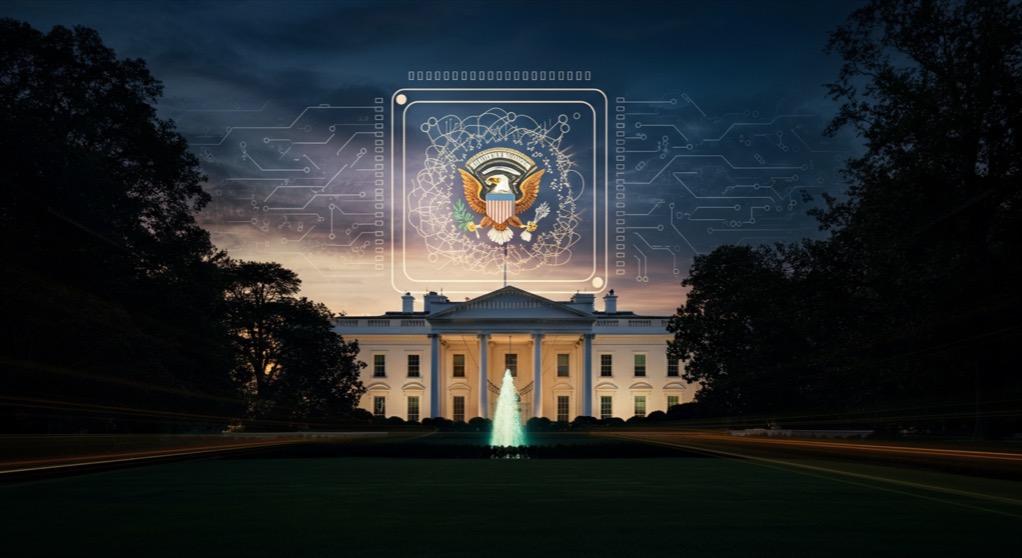
The White House launched a formal AI clearinghouse this week called Gold Eagle that puts the administration in charge of deciding which companies and entities can access frontier AI models, according to a person familiar with the matter. The development marks a decisive departure from the voluntary company-led access programs that defined the first generation of AI governance at Anthropic and OpenAI.
The clearinghouse arrived alongside confirmation from two people familiar with the matter that the Trump administration has already blocked and delayed specific model releases from both labs. Last month, the White House blocked Anthropic Claude Mythos 5 and Fable 5 over national security concerns, reinstating access only after weeks of intense behind-the-scenes negotiations between Anthropic leadership and administration officials. OpenAI was asked by the administration to gate its GPT-5.6 release to trusted partners in order to comply with government requests. Those were not isolated incidents. They were the first exercises of a new muscle the White House is now formalizing through the Gold Eagle program.
How Gold Eagle Replaces Project Glasswing and Daybreak
The Gold Eagle program, described by a source familiar with its operations, is designed on the surface as a public-private collaboration to identify and patch cyber vulnerabilities in frontier AI systems. But its real operational function is broader. It serves as the mechanism through which the White House will greenlight or deny access to new models and determine which partners can be involved. Until now, that authority belonged to the AI labs themselves. Anthropic ran Project Glasswing, granting a curated group of enterprise and government partners access to its Mythos cybersecurity model. OpenAI operated Daybreak, a parallel consortium for security-focused model access and controlled testing.
The administration moves leave the future of both initiatives in doubt. Going forward, according to one person familiar with the planning, model rollouts will require explicit government approval for which partners can be involved. That is not a marginal procedural change. It is a structural shift in the balance of power between private industry and the state over the most consequential technology since the nuclear age. Anthropic and OpenAI spent years building trust-based access programs with enterprises, intelligence agencies, and academic researchers. Gold Eagle effectively centralizes that approval authority in the White House, stripping the labs of the discretion they once held.
The Chinese Competition Timing Could Not Be Worse
The Gold Eagle rollout coincides with a moment of genuine competitive vulnerability that risks undermining the entire rationale for government gatekeeping. Chinese startup Moonshot AI unveiled its Kimi K3 model on Friday, and independent benchmarks show it has largely caught up to Claude Fable 5 and GPT-5.6 in overall capability. In at least one benchmark, it outright outperformed both US frontier models. David Sacks, founder of Craft Ventures and the former White House AI czar, called the Kimi breakthrough concerning. His full response captured the tension at the heart of the administration approach: This is how you lose the AI race. The rest of the world will not play by our rules if we bog ourselves down.
The Kimi K3 launch illustrates the fundamental risk of a government-led gatekeeping approach. China operates without equivalent export controls on its own AI models. There is no Chinese national security review process for model access. There is no Gold Eagle counterpart. Moonshot AI Kimi K3 is already broadly available through open-weight distribution channels, meaning developers in Bangalore, London, and Tokyo can access it immediately without any government clearance process. If US frontier labs face weeks-long approval cycles before clearing new partners while Chinese models ship freely, the competitive calculation shifts decisively. The White House is walking a fine line between national security and technological competitiveness, and the Kimi K3 benchmark numbers suggest the balance may already be tipping away from US labs.
What Gold Eagle Means for Founders and AI Builders
For any founder building product on top of Anthropic or OpenAI models, Gold Eagle introduces a new variable into every product roadmap and procurement conversation. Access to the latest frontier models is no longer a straightforward commercial relationship between a startup and an API provider. It is now, in part, a function of government policy with timelines and conditions that are not yet written down. Companies that rely on frontier model access for their core product face compliance requirements that do not yet exist in formal regulation, access restrictions that can be imposed without public notice, and approval cycles measured in weeks rather than hours.
The practical implications are immediate. If your startup depends on access to Claude Mythos 5 for cybersecurity features or GPT-5.6 for advanced reasoning capabilities, the US government now has a material say in whether you can use those models. Enterprise customers who ask about access timelines deserve an honest answer: model availability is no longer fully determined by your provider. The clearest hedge available to founders is to maintain optionality across model providers and include open-weight alternatives where they meet the technical requirements. Moonshot AI Kimi K3, for example, may offer a pragmatic path forward for developers who cannot afford weeks of uncertainty waiting for clearance on a US frontier model.
The Official Stance Versus the Operational Reality
A White House official told CNBC that the administration does not provide approvals for AI releases from private companies. The official characterized any engagements, testing, or meetings with government experts as voluntary, and stated that decisions on timing and scope of model releases rest entirely with the companies. The official pointed to President Trump June executive order asking companies to voluntarily give the government early access to models for testing. But the actions on the ground contradict the public framing. The blocking of Mythos 5 and Fable 5 was not voluntary. The directive for OpenAI to limit GPT-5.6 to trusted partners was not voluntary. And the Gold Eagle clearinghouse, once operational, will not be voluntary either.
The disconnect between the public stance and the operating reality is important context for every founder evaluating AI supply chain risk. Public statements from the White House emphasize partnership, voluntary collaboration, and industry-led innovation. Private actions reveal a government that has already exerted coercive control over specific model releases and is building the infrastructure to make that control permanent and systematic. The safest read of the situation for any operator: plan as if Gold Eagle is the new normal, build redundancy into your model stack, and watch how Kimi K3 availability timelines compare to US frontier model access over the next quarter. The winners in the coming phase of AI development will be those who build for regulatory optionality, not those who bet on a single access pathway.