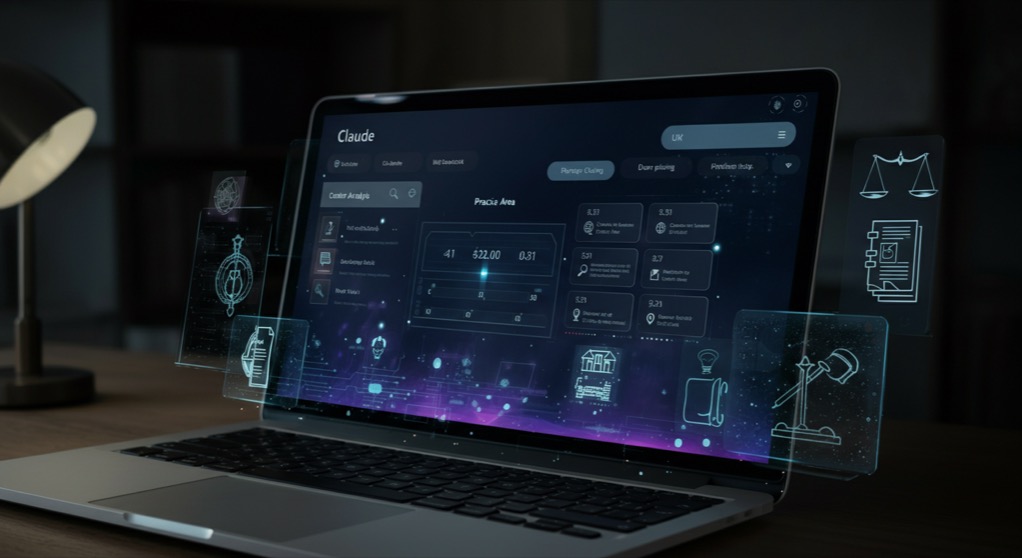
On July 18, 2026, shares of European legal data companies including Relx, Wolters Kluwer, and Thomson Reuters dropped sharply. The cause was not an earnings miss or a regulatory decision. It was a product page on Anthropic's website. Claude Legal Solutions is Anthropic's most aggressive vertical play to date: a suite of 20+ integrations and 12 practice-area plugins purpose-built for law firms, corporate legal departments, and solo practitioners. The market reaction was immediate and unambiguous. Bloomberg Law reported the launch "sent a market warning." The Guardian noted it "hit shares in European data companies." Within hours, analysts were marking down the valuation of incumbents whose products had barely changed in two decades.
What Claude Legal Solutions Actually Does
Claude Legal Solutions is not a chatbot dressed up with legal terminology. It is a platform that connects Claude directly into the tools lawyers actually use. The 20+ integrations span the entire legal technology stack. Legal research databases Westlaw and LexisNexis are connected, meaning a lawyer can ask Claude a research question and get answers grounded in the firm's subscription databases. Document management systems iManage and NetDocuments are integrated, so Claude can read, summarize, and compare documents stored in the firm's existing repository. E-discovery platforms Relativity and Everlaw are linked, giving Claude access to millions of documents in litigation contexts. Practice management tools Clio and MyCase are connected, enabling Claude to pull matter details, deadlines, and client history.
The 12 practice-area plugins are where the product gets genuinely interesting. Instead of a general-purpose AI that a lawyer has to prompt correctly to get useful work, each plugin is pre-configured for a specific legal domain. The contract review plugin knows what a force majeure clause looks like and where to find it. The litigation research plugin knows which case reporters matter for your jurisdiction. The M&A diligence plugin knows what documents to expect in a 200-person asset purchase. The compliance plugin maps regulatory requirements to contractual obligations. The intellectual property analysis plugin handles patent claims and trademark searches. Each plugin is shaped by the workflows of that practice area rather than requiring lawyers to adapt their workflows to the AI.
Why the Market Panicked
The legal technology market is roughly $30 billion globally. For the last two decades, it has been dominated by three companies: Thomson Reuters (owner of Westlaw), Wolters Kluwer, and Relx (owner of LexisNexis). Their products are entrenched in every major law firm in the world. Lawyers train on Westlaw in law school. Firms spend millions annually on LexisNexis subscriptions. The switching costs are enormous, and the incumbents have faced no credible threat because building a legal search engine or a practice management system requires domain expertise that most technology companies do not have.
What Anthropic did differently is bypass the category entirely. Instead of building a better legal research tool, it built the platform that makes legal research tools one feature among many. A lawyer using Claude Legal Solutions does not open Westlaw to search and then copy the result into a memo. Claude searches Westlaw through the integration, synthesizes the findings, drafts the memo, and files it to iManage. The workflow collapses from five steps into one. That is why shares dropped. The incumbents are not competing with a better version of their own product. They are competing with a product that replaces their entire category.
The timing is significant. Legal technology has been one of the last bastions of software that predates the modern internet. Many law firms still run on systems designed in the 1990s. The pandemic forced some modernization, but most legal tech spending has gone to incremental improvements rather than architectural change. Anthropic is betting that the AI moment makes that architecture obsolete, and the market reaction suggests investors agree.
Key Lessons for Founders
The Anthropic Claude Legal Solutions launch offers four takeaways for founders building in any industry being reshaped by AI.
First, the platform strategy beats the point solution strategy every time. Anthropic did not launch a legal AI. It launched a platform with 20 connectors and 12 plugins. The breadth of the launch creates a moat that a point solution cannot cross. A startup building a better contract review tool is now competing with a platform where contract review is one of twelve plugins, all connected to the firm's existing tools.
Second, integrations are the distribution channel. Every connector to Westlaw, LexisNexis, iManage, NetDocuments, Relativity, Everlaw, Clio, and MyCase is a distribution point. A lawyer cannot use Claude Legal Solutions without touching the integration layer, and once they do, the switching cost rises for Anthropic's competitors.
Third, the incumbents' existing revenue streams are a liability, not an asset. Thomson Reuters and Wolters Kluwer built businesses selling information access. Their margins are high because they have been reselling the same content for years. AI-native platforms that consume information as an input rather than selling it as a product can undercut those margins structurally.
Fourth, vertical AI products win by knowing the workflow, not just the data. The 12 practice-area plugins are powerful not because Claude is a good language model but because each plugin encodes the specific workflow of that practice area. A contract review plugin knows what to look for. A litigation plugin knows how to frame a research question. Founders building vertical AI products should spend more time understanding the workflow than fine-tuning the model.
Anthropic's legal play also signals where the company is heading next. Healthcare, finance, and consulting share the same pattern as legal tech: high margins, entrenched incumbents, workflow-heavy processes, and products that have not changed in decades. Claude for Health, Claude for Finance, and Claude for Consulting are not questions of if but when. The legal launch is the template.