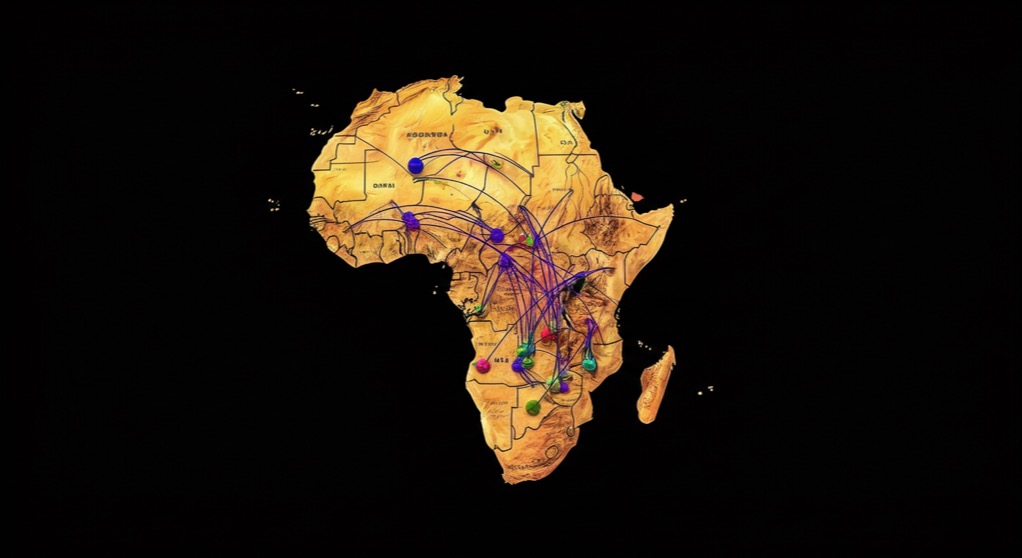
What happens when an AI model cannot understand Swahili, Yoruba, or Hausa? For the 1.4 billion people across Africa, that is not a hypothetical question. It is the current reality of the AI ecosystem, where over 98% of training data comes from English, Chinese, and a handful of European languages. The gap between the languages people speak and the languages AI understands is the single largest barrier to AI adoption in Africa. On April 28, 2026, Pleias and the GSMA released CommonLingua, an open-source language identification model designed to close that gap, supporting 61 African languages in a package so compact it runs on a Raspberry Pi.
CommonLingua represents a fundamentally different approach to multilingual AI. With only 2.35 million parameters, it is 250 times smaller than alternatives like OpenLID or GlotLID, yet it outperforms them across every benchmark. The model was developed under the GSMA's 'AI Language Models in Africa, by Africa, for Africa' initiative and is released under the Apache 2.0 license, making it freely available for commercial and non-commercial use.
A Model Designed for the Long Tail of Languages
Most language identification models assume the user has access to a GPU cluster, a tokenizer trained on English text, and a server room with reliable power and internet. CommonLingua assumes none of these things. The model operates directly on raw UTF-8 bytes, eliminating the need for a tokenizer entirely. This design choice is not an academic curiosity; it is a practical necessity for supporting languages that use Latin, Arabic, Ethiopic, N'Ko, Tifinagh, Devanagari, and CJK scripts within a single architecture. A tokenizer trained primarily on English text would mangle Amharic or Hausa before the model even gets a chance to analyze them.
The architecture combines three causal Conv1D layers with a single bidirectional attention layer using Rotary Position Embedding (RoPE). A trigram hash embedding layer maps byte 3-grams into a 4096-bucket embedding table, where hash collisions act as regularization. In Pleias' own ablation studies, this trigram approach improved macro F1 by 1.2 points over the non-gram baseline. The model is trained on 2,482,568 paragraphs from Structured Wikipedia and the Common Corpus dataset, with a deliberate emphasis on documents containing realistic OCR errors, which are common when digitizing African language texts from physical archives.
The result is a model that can process over 26,000 paragraphs per second on an H100 at bf16 precision and over 550 paragraphs per second on a single CPU thread. For the deployment environments relevant to African developers, that CPU figure matters more: CommonLingua does not need a GPU to be useful.
Benchmark Performance That Outpunches Its Weight Class
On the CommonLID benchmark, a held-out evaluation set containing 376,000 paragraphs across over 200 languages, CommonLingua achieves 77.63% strict accuracy and 82.92% equivalence-class accuracy, with a macro F1 score of 0.7879. These numbers are significant because CommonLingua accomplishes them with 2.35 million parameters versus roughly 600 million for every alternative.
| Model | Parameters | Languages | Strict Accuracy | Macro F1 |
|---|---|---|---|---|
| OpenLID v2 | ~600 M | 200 | 55.77% | 0.6390 |
| fastText-218 (NLLB) | ~600 M | 218 | 59.53% | 0.6590 |
| GlotLID v3 | ~600 M | 2,102 | 57.69% | 0.6729 |
| CommonLingua | 2.35 M | 334 | 77.63% | 0.7879 |
The +11.5 point macro F1 gain over GlotLID v3, the previous state-of-the-art, is achieved with 0.4% of the parameters. This is not incremental improvement; it is a fundamentally different design philosophy. CommonLingua proves that specialized, compact models can outperform bloated generalist models on focused tasks.
The GSMA Partnership and the Africa AI Ecosystem
The GSMA, the trade body representing over 750 mobile operators serving more than 5 billion subscribers worldwide, did not back CommonLingua as a charitable side project. Mobile network operators across Africa are integrating CommonLingua into customer service, agricultural extension, and financial inclusion applications. When a farmer in Nigeria calls a helpline speaking Hausa, or a small business owner in Kenya asks about loan products in Swahili, CommonLingua identifies the language so the downstream AI system can route and respond appropriately.
The 'AI Language Models in Africa, by Africa, for Africa' initiative frames this as both an economic and technological imperative. The African mobile economy is projected to contribute over $180 billion to GDP by 2030, according to GSMA data. AI services are a growing component of that value, but they cannot serve users they cannot understand. CommonLingua is the infrastructure layer that enables every subsequent AI service to work in the languages actual Africans speak, rather than forcing users to adapt to English or French.
Pleias, a French AI startup focused on open-data language models, brought the technical expertise. The company specializes in building models trained exclusively on rights-cleared, provenance-based open data, and CommonLingua extends that philosophy to the African language domain. The training dataset itself is also open-sourced, allowing the community to extend coverage to additional languages beyond the initial 61.
How to Use CommonLingua
Getting started with CommonLingua requires a Python environment and PyTorch. The model is hosted on HuggingFace at PleIAs/CommonLingua and comes with a simple predict.py script:
pip install torch huggingface-hub
python predict.py "Wikipedia est une encyclopedie universelle, multilingue."
# Returns: fra 0.99
The model accepts raw UTF-8 text as input, pads or truncates to 512 bytes, and returns a language code with confidence score. The intended workload is paragraph-level classification for corpus curation and routing. The inference script supports both CPU and GPU execution, with bf16 providing a 2.4x throughput improvement over fp32 on supported hardware.
For production deployments processing millions of paragraphs, the model can be containerized and served behind a lightweight API. Given its tiny footprint, CommonLingua is suitable for edge deployments on mobile network infrastructure where GPU access is unavailable.
Who This Is For
CommonLingua is designed for three distinct audiences. First, African developers and startups building language-specific AI applications that need reliable language identification as a preprocessing step. Second, mobile network operators and telecom companies serving multilingual African markets who need to route customer interactions to language-appropriate AI systems. Third, the broader open-source AI community interested in compact, efficient architectures that prove scale is not the only path to performance.
For solo founders and small teams, CommonLingua is a textbook example of how to compete with big tech AI: find a concentrated, high-value problem that generalist models solve poorly, build a purpose-specific model that is 250x smaller and 11 points more accurate, and release it under an open license. The network effects are already visible: with 29 HuggingFace likes and growing adoption among GSMA member operators, CommonLingua is becoming the default language identification layer for African mobile AI deployments.