When Etched exited stealth in June 2026 with $800 million raised and $1 billion in sales contracts, the AI chip market took notice. One month later, the startup is in talks to raise fresh capital at a $20 billion valuation, a fourfold increase from its previous round. The story behind that surge is not about hype. It is about a structural shift in how the AI industry spends its money.
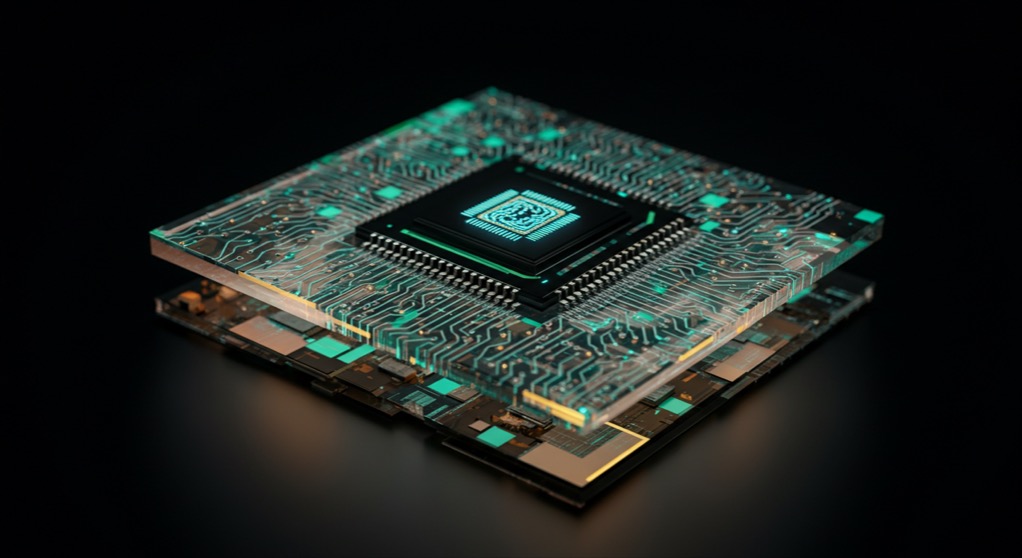
Etched builds application-specific integrated circuits (ASICs) designed exclusively for transformer-based AI models. Unlike Nvidia GPUs that handle both training and inference workloads, Etched chips sacrifice flexibility for efficiency. The bet is that as AI moves from training frontier models to running them at scale, the market will demand chips that deliver the lowest cost per inference rather than the broadest compatibility. That bet is now paying off faster than anyone expected.
The $1 Billion Demand Signal
The $20 billion valuation talks come against the backdrop of a broader milestone: inference chip demand has crossed the $1 billion threshold for specialized silicon designed specifically for running trained models. This figure represents contracts, pre-orders, and deployment commitments from hyperscalers, enterprise data centers, and AI application companies that are moving beyond the experimental phase.
For context, the AI chip market has been overwhelmingly dominated by Nvidia, whose GPUs captured roughly 80 percent of all AI workloads in 2025. But that dominance was built on the training era, when organizations competed to build larger models and needed the most flexible compute substrate available. The inference era has different economics. When you are serving millions of API calls per day on a deployed model, a 2x improvement in cost per token translates directly to margin, and that is where specialized silicon shines.
Etched claims its Sohu chip delivers up to 10x the inference performance of Nvidia H100 GPUs on transformer-based workloads, with proportionally lower power consumption. If those claims hold in production deployments, the company is not just competing with Nvidia. It is offering a fundamentally better product for the fastest-growing segment of the AI compute market.
From Harvard Dropout to $20 Billion
Etched was founded in 2022 by Harvard dropouts Gavin Uberti, Chris Zhu, and Robert Wachen, a founding team that bet early on the dominance of the transformer architecture. At a time when the AI community was debating whether transformers, state-space models, or something entirely new would win the architecture race, Etched committed its silicon design to transformers specifically. That bet seemed risky in 2022. Today, with every major frontier model from GPT-4 to Claude to Gemini to Llama using transformers, it looks like one of the smartest architectural bets in the industry.
The company counts Peter Thiel, Ribbit Capital, Sequoia Capital, Jane Street, and TSMC-linked venture investors among its backers. The involvement of TSMC is particularly significant. It signals that Etched has manufacturing partnerships with the world's most advanced chip foundry, which is itself a moat that few AI chip startups can replicate. TSMC's capacity is the most constrained resource in the semiconductor industry, and a startup that has secured it has already cleared one of the hardest hurdles.
What This Means for the AI Infrastructure Landscape
Etched's valuation trajectory from $5 billion in January to a potential $20 billion today is the single clearest market signal that the AI compute market is fragmenting. Nvidia's GPU dominance was never guaranteed to persist through the full AI lifecycle, and the inference phase is where the cracks are most visible. If Etched can deliver on its performance claims, the company could capture a meaningful share of the inference chip market, which analysts project will grow from roughly $15 billion today to over $100 billion by 2030.
For founders and operators building AI applications, the implications are direct and practical. Cheaper inference means lower operating costs for AI features, which means more use cases become economically viable. A startup building an AI customer support agent that costs $0.02 per query today might see those costs drop to $0.002 with specialized inference silicon. At that price, entirely new categories of AI products become possible, from always-on voice agents to real-time video analysis to autonomous systems that run continuous inference loops.
The second-order effect is on the competitive dynamics of the AI industry itself. If inference costs drop by an order of magnitude, the barriers to entry for AI-native startups come down dramatically. Incumbents with large compute budgets lose their pricing advantage, and startups that could not afford to run large-scale inference workloads suddenly can. That is the kind of infrastructure shift that reshapes entire markets.
The Open Question
The biggest risk for Etched is execution. Building a chip is hard. Building a chip that works at scale in production data centers is harder. The company's Sohu chip has been demonstrated in lab conditions, but it has not yet been deployed in production environments at the scale that would justify a $20 billion valuation. Until enterprises are running real workloads on Etched silicon, the valuation remains a bet on potential rather than a reflection of delivered value.
There is also the question of architectural risk. While transformers dominate today, the industry is actively researching alternatives. If a post-transformer architecture emerges and gains adoption, Etched's specialized silicon could face an existential threat. The company is betting that transformers are not just the present of AI but its long-term future, and that is a bet that carries genuine technological risk.
But for now, the market is signaling that specialized inference chips are the next big thing in AI infrastructure. Etched is the purest play on that thesis, and the $20 billion valuation reflects the market's conviction that the inference era is real, it is happening now, and the winners will be the companies that build the cheapest, fastest silicon for running deployed AI at scale.